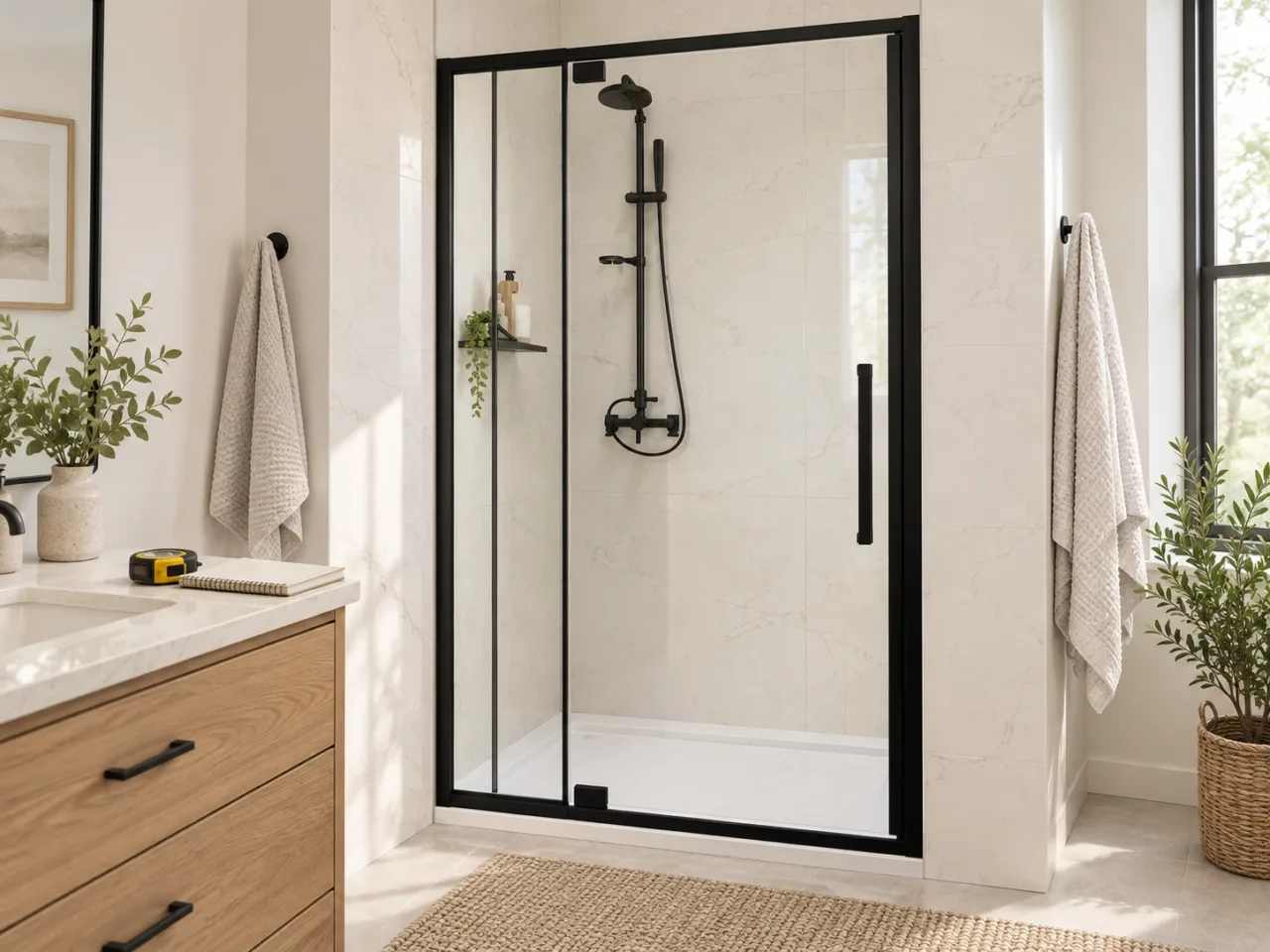
An old shower door gives you a familiar outline to shop against. It is tempting to choose a new one with a similar width and assume the replacement will be straightforward. But the old frame may hide mounting holes, surface damage, or a different opening than you expect.
Before ordering, find out whether you need a replacement part or a complete door, what the old frame is covering, and whether the new door gives you a better way in and out.
Start with the reason for replacing it
Describe the problem before looking at styles. Is the door difficult to operate? Are you changing the room’s appearance? Is a component missing? Is there visible damage? Do you want a different entry arrangement?
If the concern is an individual part, gather the existing product’s model, order record, labels, and photos. Ask the original manufacturer or seller whether an appropriate replacement part is available. Do not assume a handle, roller, hinge, or seal is compatible because it looks similar online.
If there is damaged glass, loose structural hardware, or another potentially unsafe condition, stop using the affected door and obtain qualified guidance. This article is a buying plan, not a removal or repair procedure.
For an existing AROJAY order, After-Sales Support is the place to begin identifying the product and the issue.
Photograph the current installation
Take five photos before removal: the whole door closed, the door open, the left wall connection, the right wall connection, and the bottom track or threshold. Add a close-up of any label, damaged area, or part you want to replace.
These photos help explain the current arrangement to a seller or installer. They also preserve details that may be harder to reconstruct after removal.
Avoid describing the door only as “frameless” or “sliding.” Those words do not identify the glass configuration, mounting locations, size selection, or individual components. A product label and model-specific drawing are more useful than a style nickname.
Measure the opening, not just the old frame
The new product must match its required finished opening. Measuring the outside edge of the old frame does not establish that opening, especially where profiles cover the wall surface.
Use the finished-opening guide and record what can be confirmed accurately. If the existing system prevents a reliable measurement, ask the installer how to verify the opening without unsafe or premature removal. Mark uncertain measurements clearly instead of turning them into an order specification.
Keep width readings at different heights separate. Do not average them to create a convenient number. The new door’s allowed adjustment and mounting conditions must be checked against its own manual; they cannot be borrowed from the door being removed.
If new tile or a new base is part of the remodel, use the final planned finishes for the planning discussion and confirm completed dimensions before ordering the final configuration.
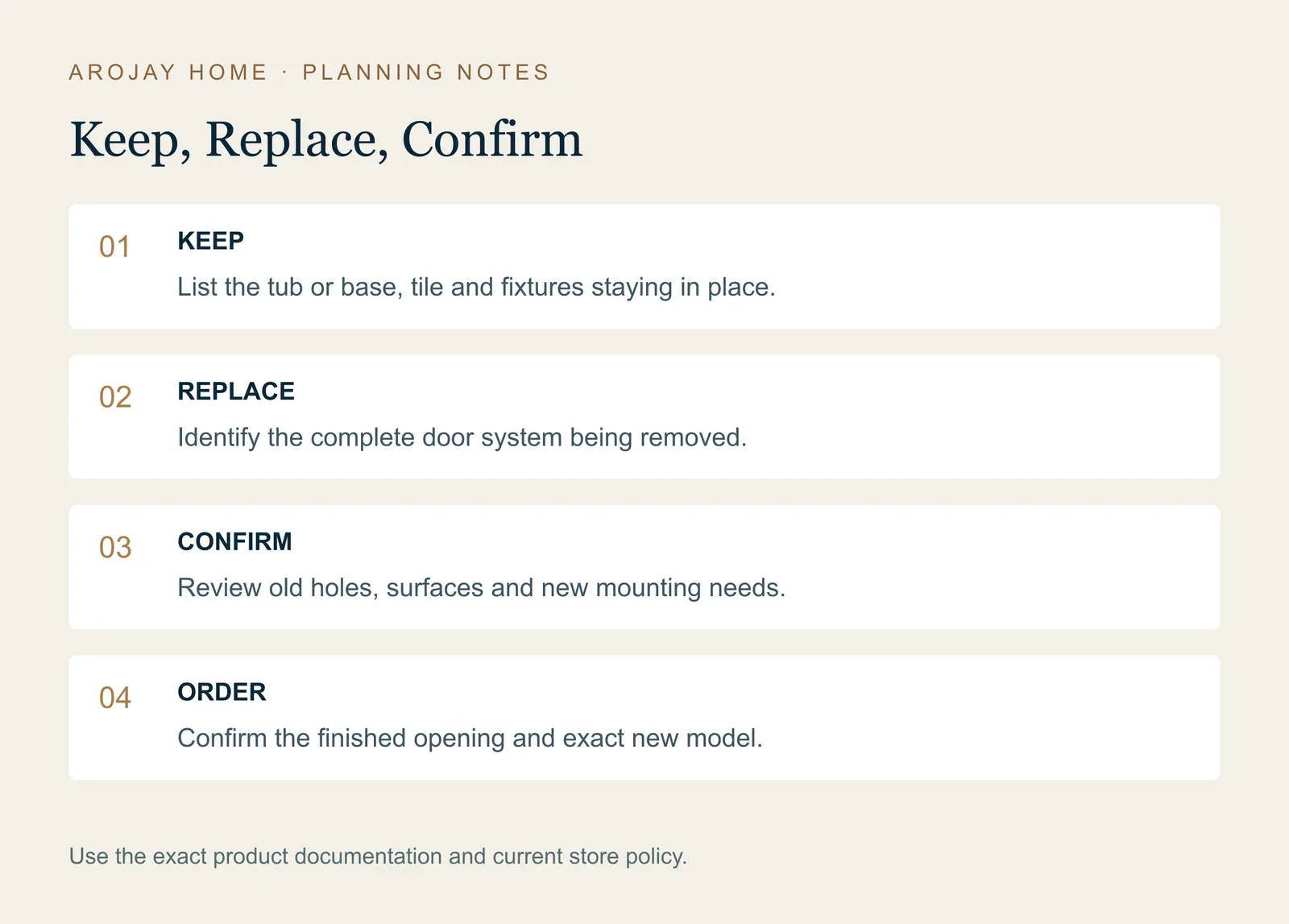
Find out what removal will leave behind
Ask the installer to explain the likely condition of the surfaces after removal. Old holes, adhesive, silicone, discoloration, and covered edges may require attention before a new system goes in.
Put these questions into the site review:
- Will existing mounting holes remain visible?
- Are the walls and base suitable for the new mounting method?
- Does the proposed hardware require support in a different location?
- Is any repair or waterproofing work needed?
- Who is responsible for assessing and completing that work?
A wider profile might conceal a mark, but appearance is not evidence that a mounting arrangement is structurally suitable. Do not reuse old holes, anchors, or hardware unless the applicable instructions and qualified installer permit it.
Clarify the scope before ordering so a door-only purchase does not unexpectedly become a surface-repair project on installation day.
Reconsider the movement while you have the opportunity
Replacing like for like may be appropriate, but it is worth noting what did not work in the old setup. Did the handle meet a towel bar? Was the entrance on the inconvenient side? Did an open panel restrict the route to the vanity?
Map the intended entry route and nearby fixtures. A new movement style can change where space is needed. Sliding panels do not swing into the bathroom, but their overlap and entry opening still matter. A swinging or folding arrangement needs review of its complete movement path.
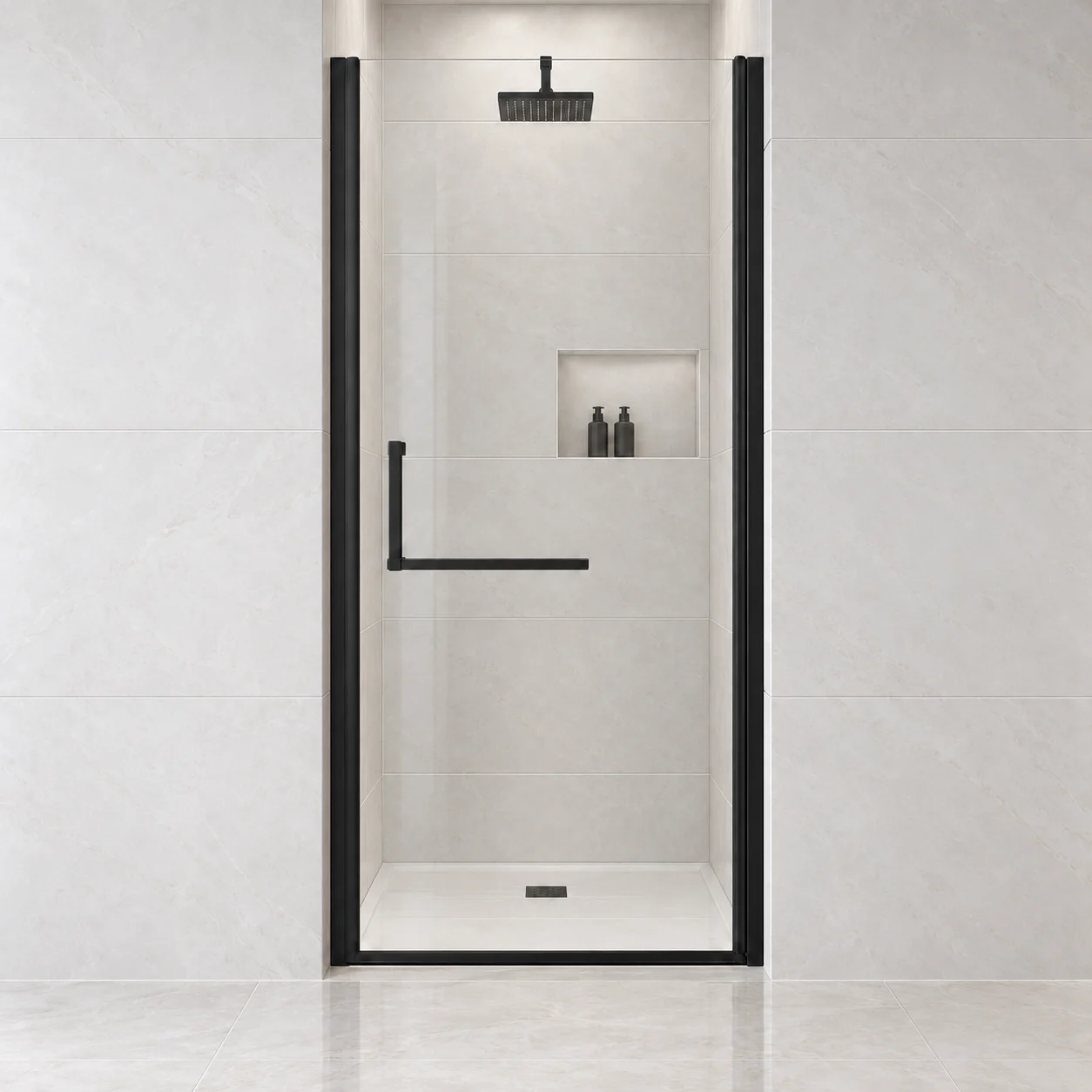
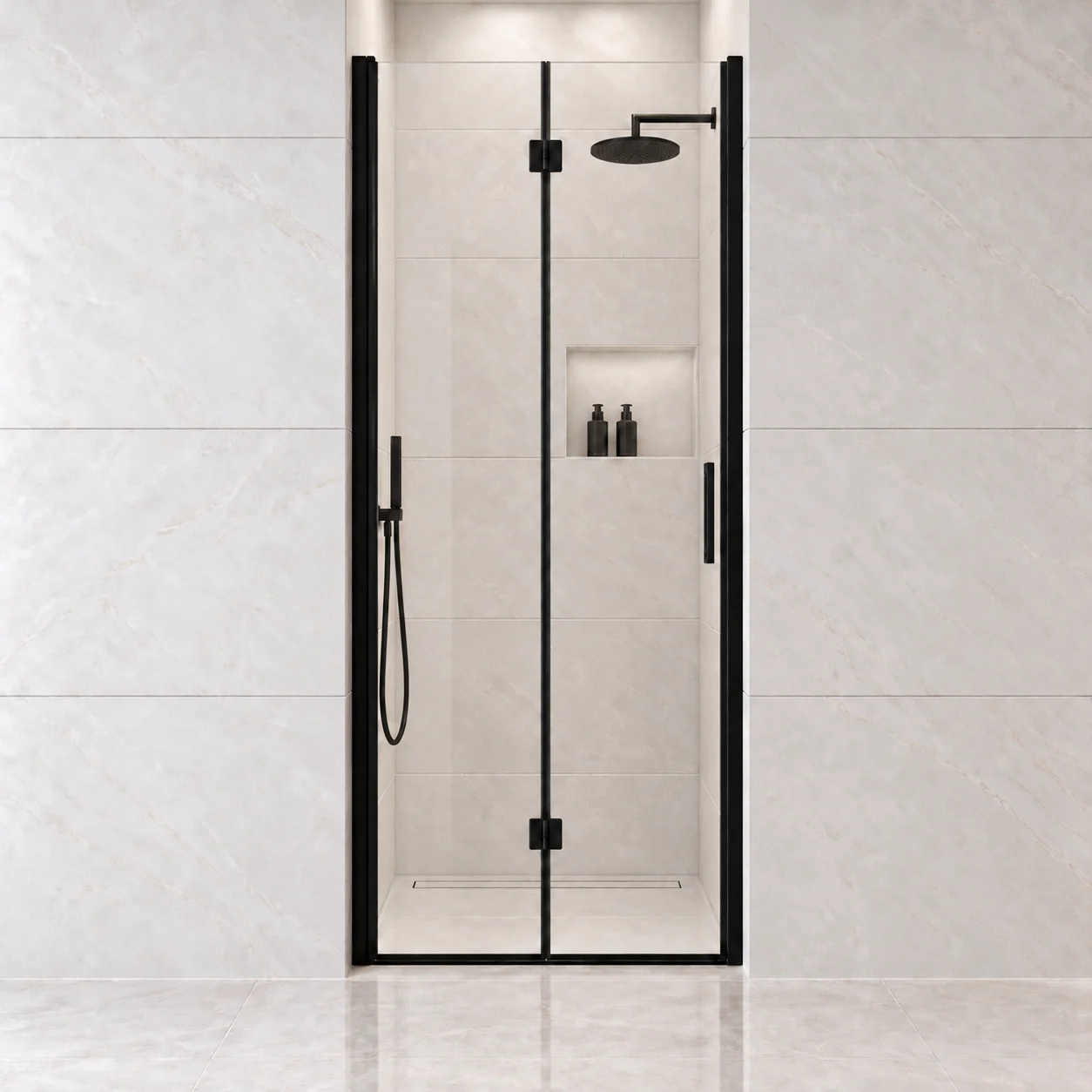
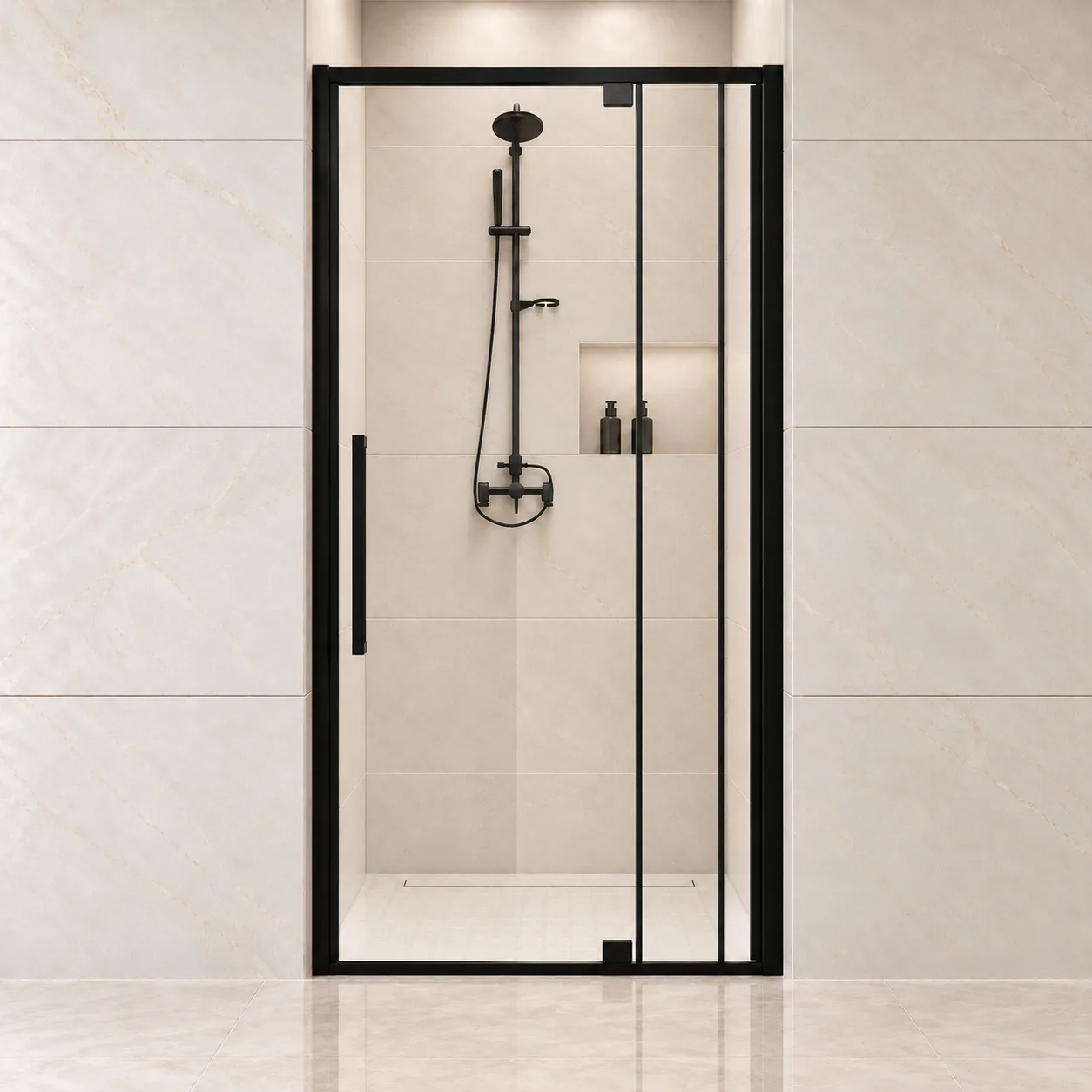
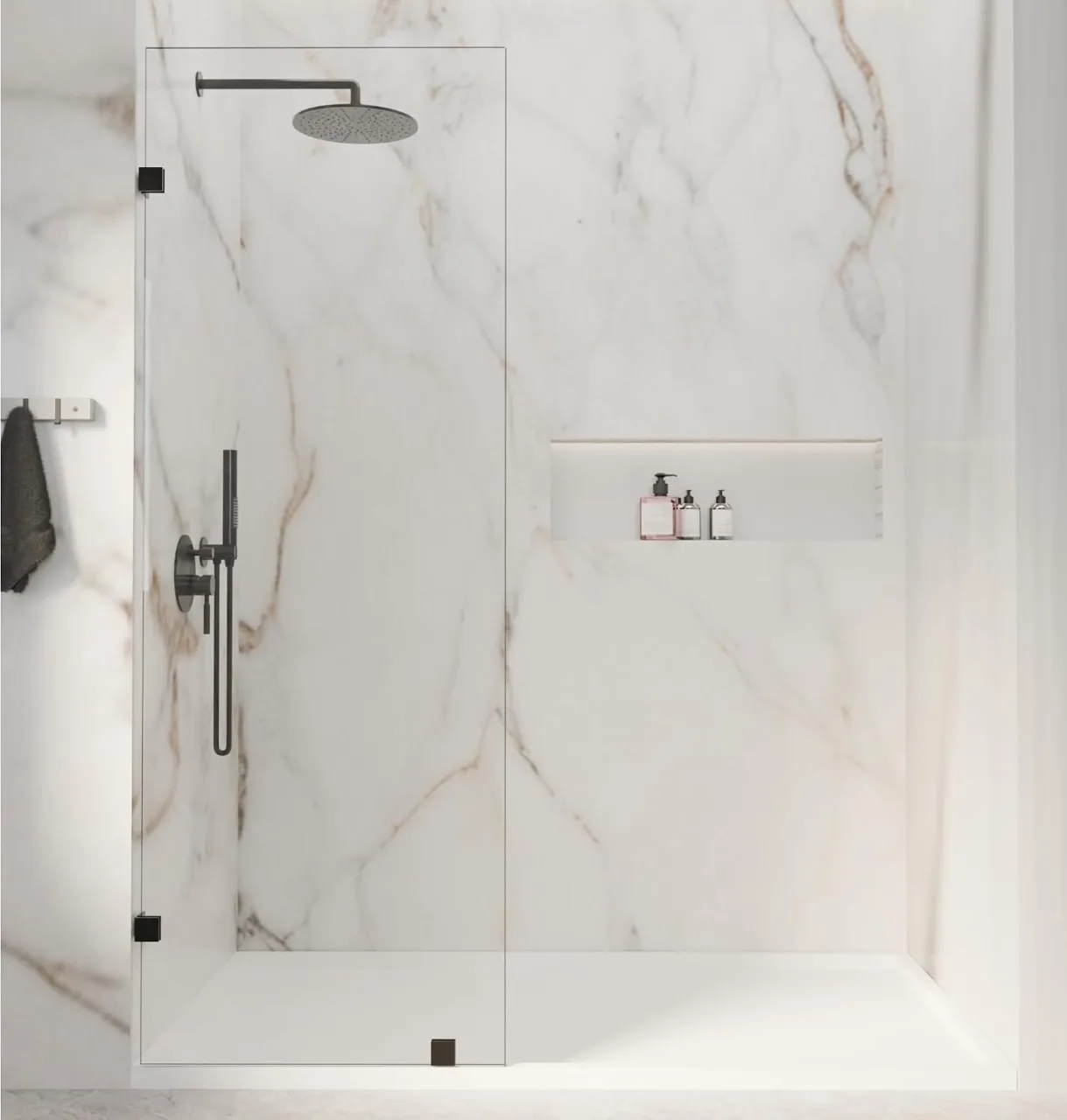
For example, AROJAY's P01 pivot door includes a 32–33.2-inch opening selection and swings outward. The P02 bifold pivot also lists a 32–33.2-inch option, but its panels fold as it opens. The shared width range does not make them interchangeable: compare the space occupied by the open panel or folded panels, the handle, and the remaining entrance.
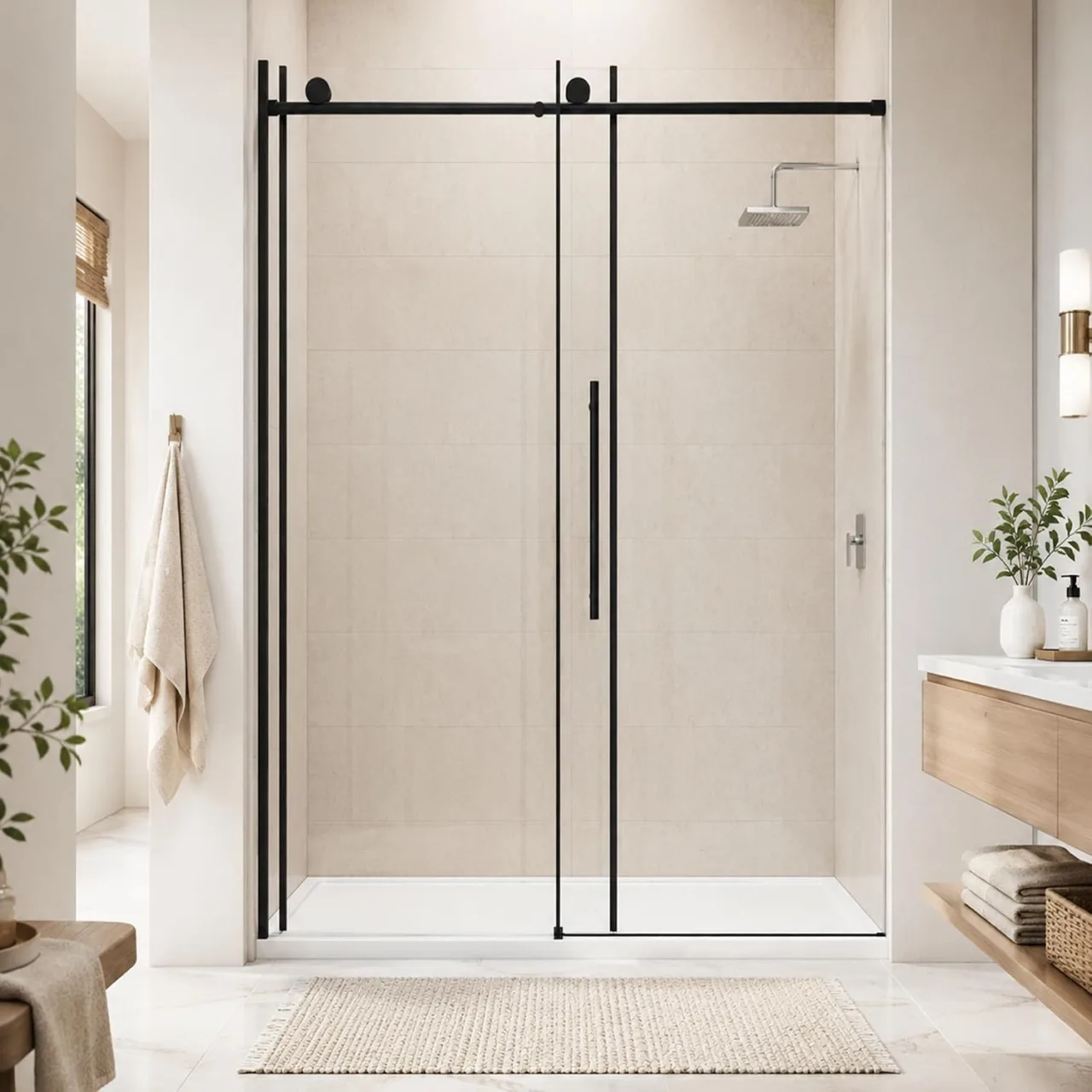
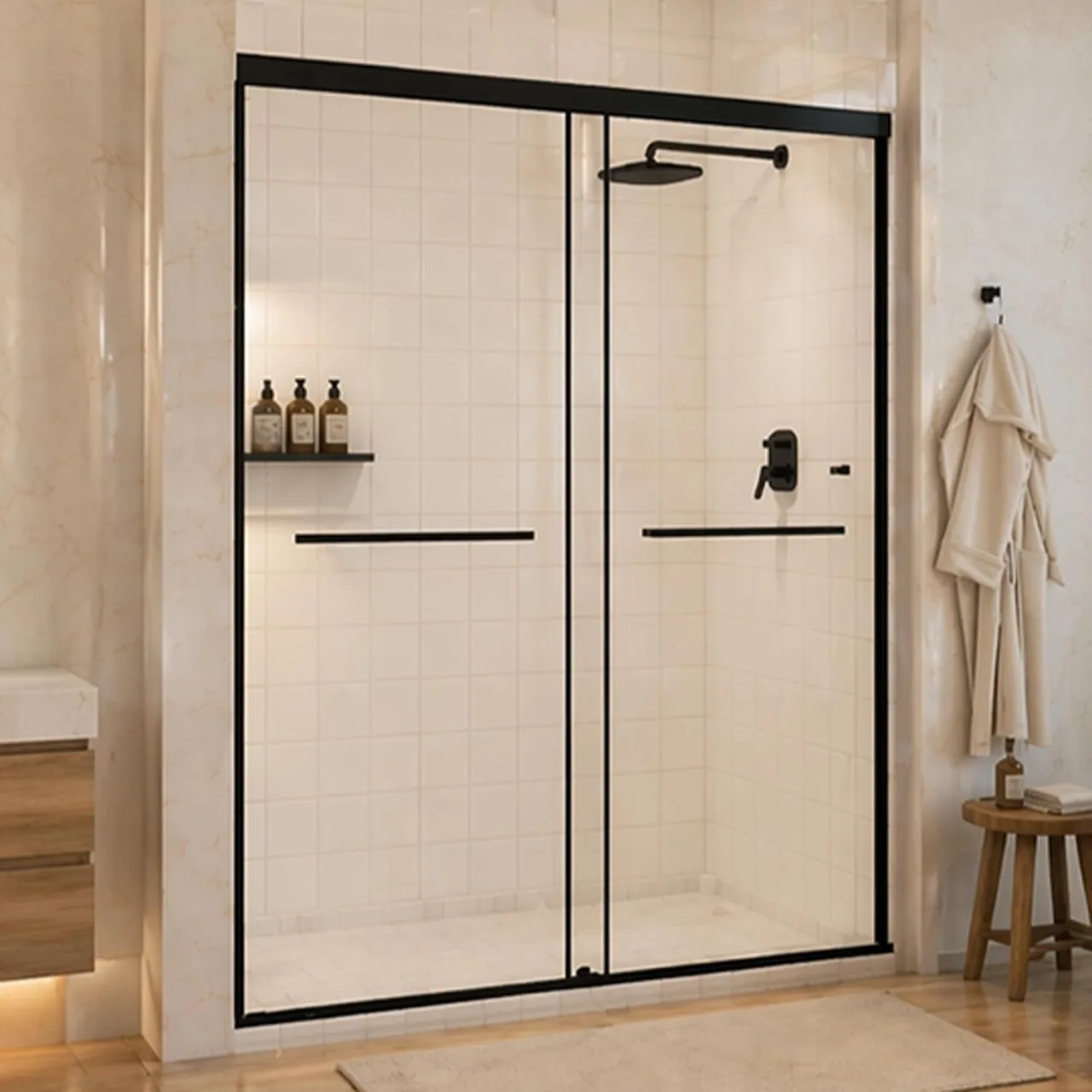
For a wider shower, the S03 double slider offers 44–48-inch and 56–60-inch opening selections with sideways movement. If your old door swings toward the vanity, that is a useful alternative to investigate—not permission to reuse the old mounting holes.
Coordinate the delivery and installation sequence
Discuss timing with your installer before removing a working system. The plan should account for delivery, inspection, any necessary repairs, installation, and the time required by the specified materials before use.
Ask how long the bathroom may be unavailable under the proposed scope, and what could change that estimate. A general online installation time does not reflect hidden repairs or the conditions in your room.
When the new order arrives, match the model and configuration to the order and inspect it before irreversible installation work. Keep the packaging and follow the applicable handling instructions. Use the installation preparation checklist to organize the handoff.
Compare complete proposals
If you are comparing installers or product options, give each the same scope. Ask whether the estimate includes removal, disposal, surface preparation, installation, and any return visit. Separate the door price from other work so differences are clear.
Before paying, send the installer the product link and selected size. Ask for a written answer to any remaining question about the walls, mounting points, or door movement. Keep that answer with your measurements and quote.
Then review AROJAY’s current door options with that information beside you. A successful replacement starts with a clear match between the new system and the finished room—not the assumption that every door with a similar label fits the same way.