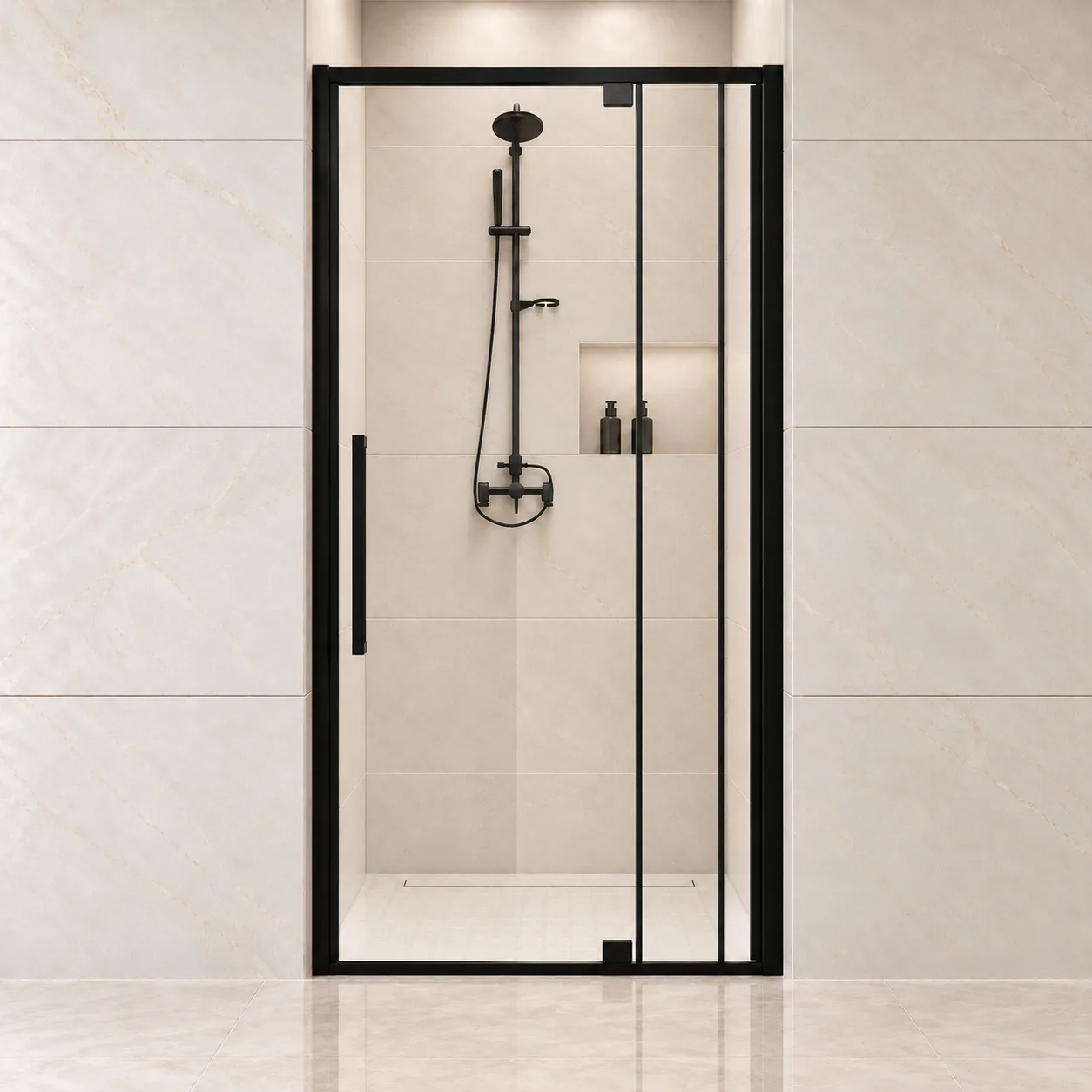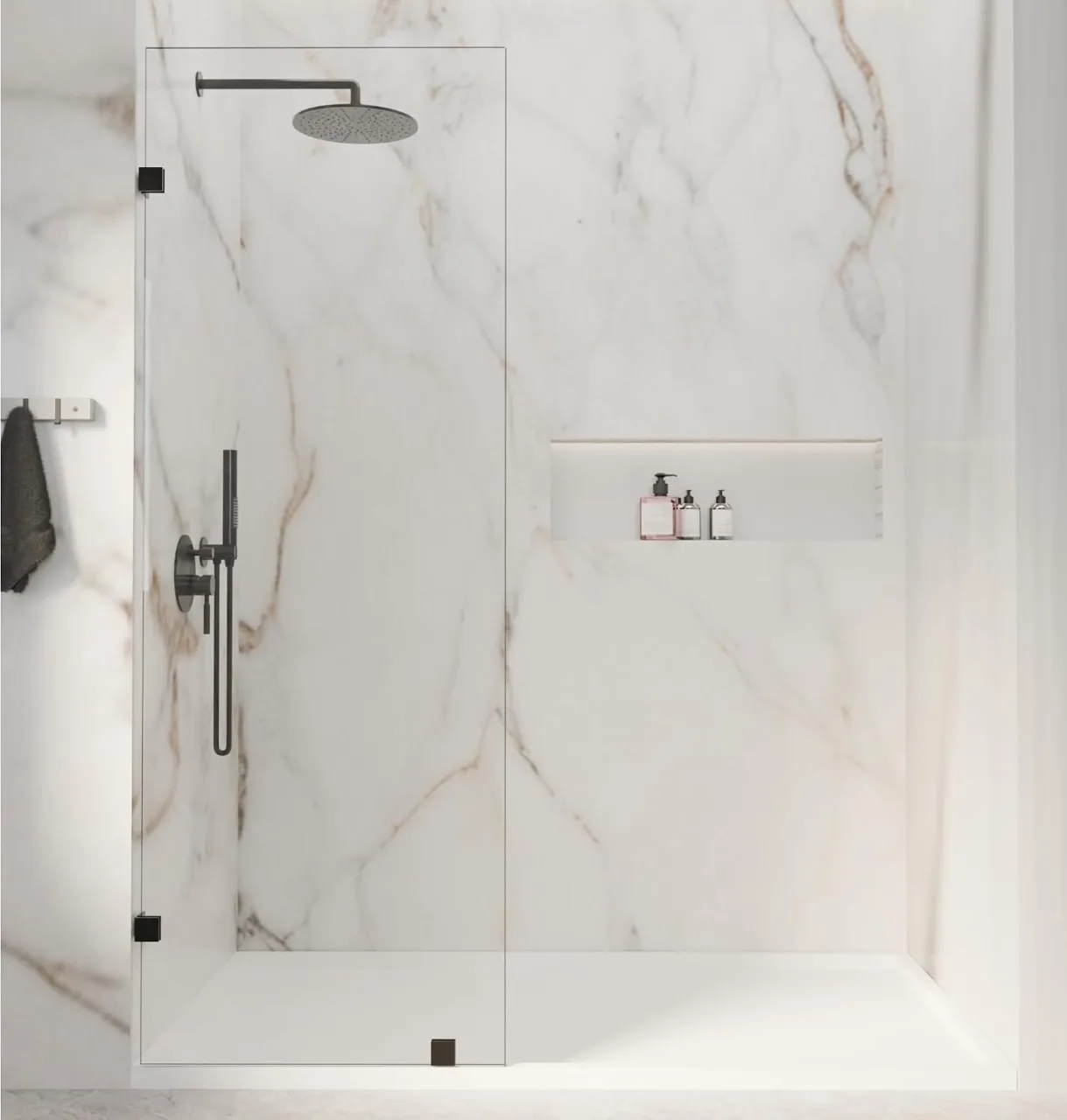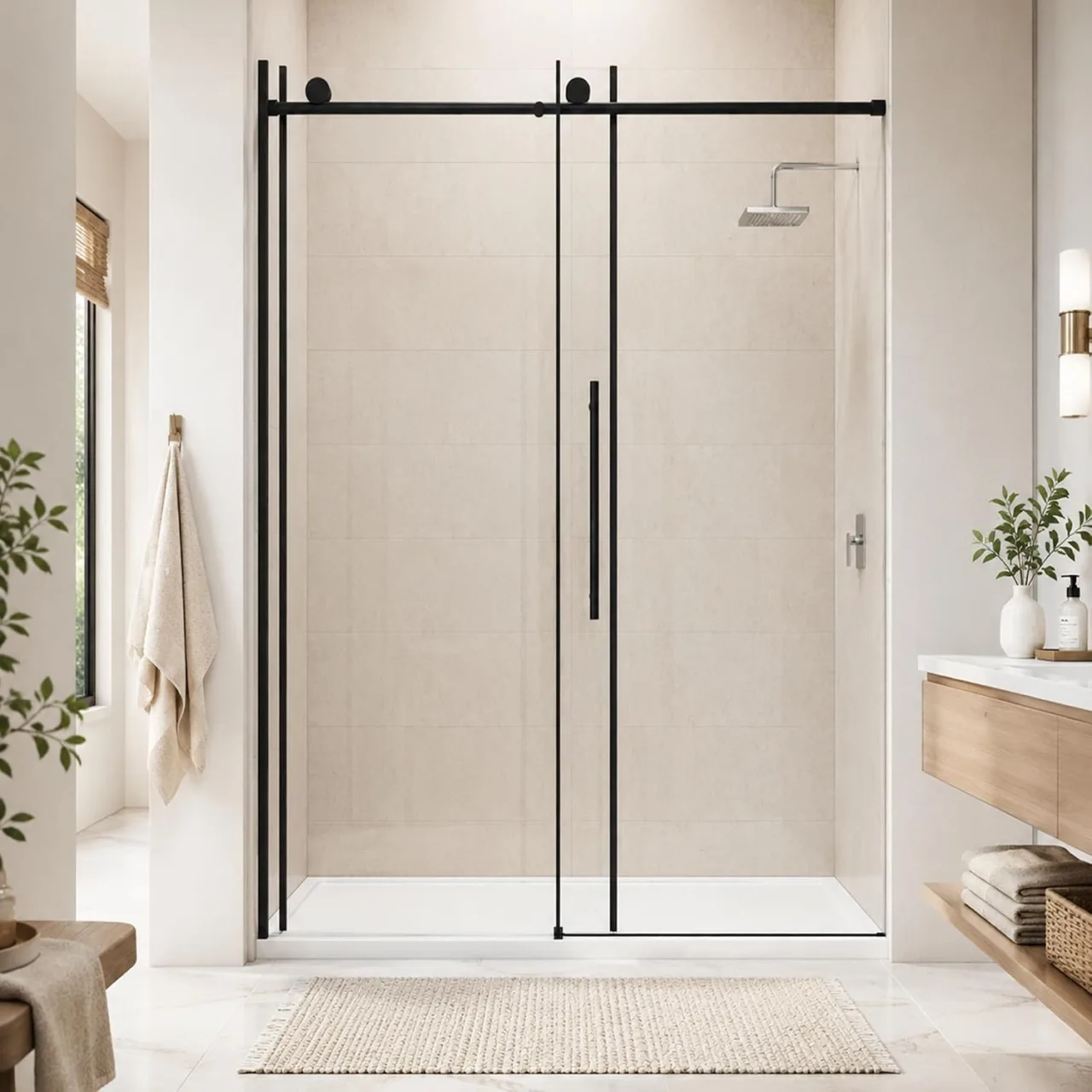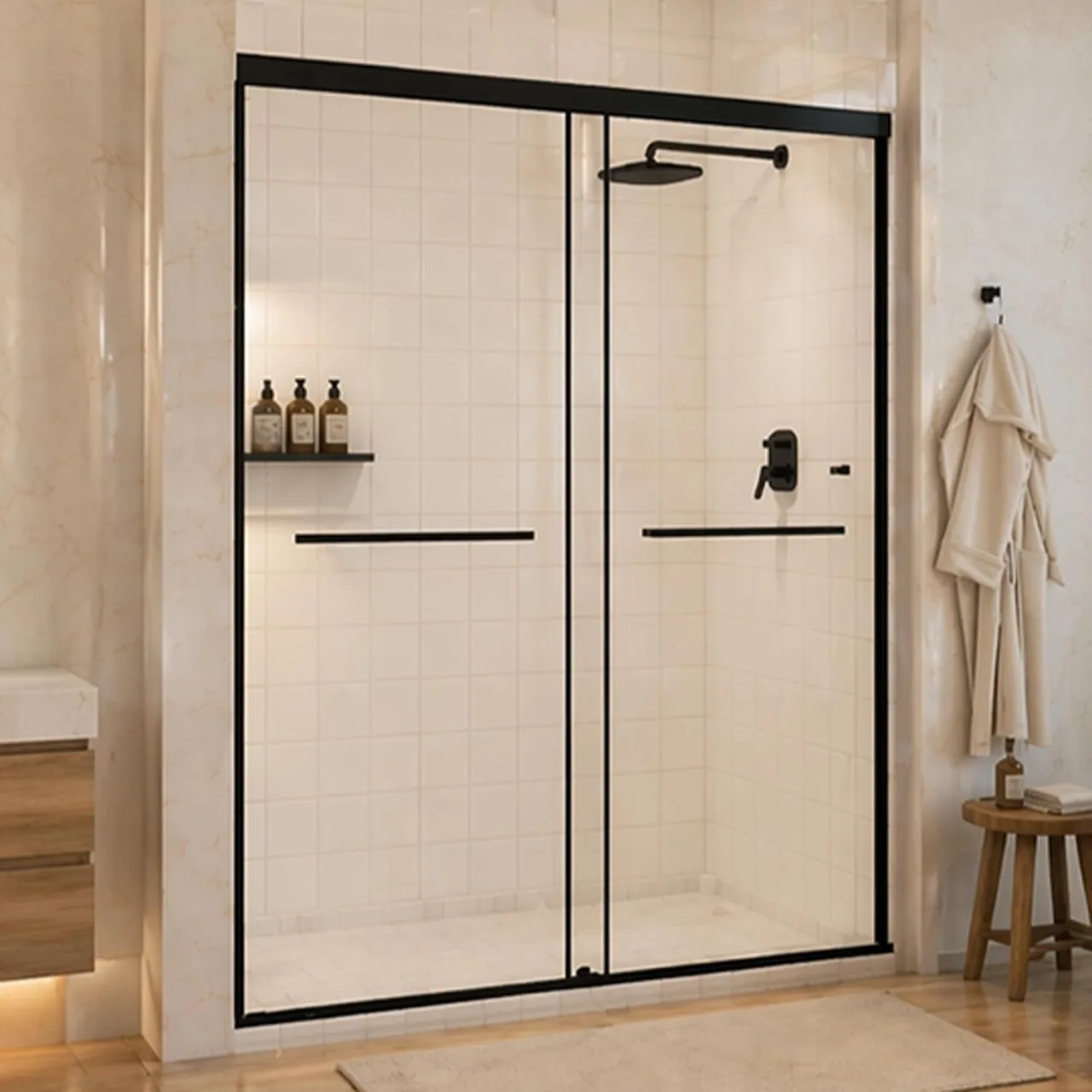
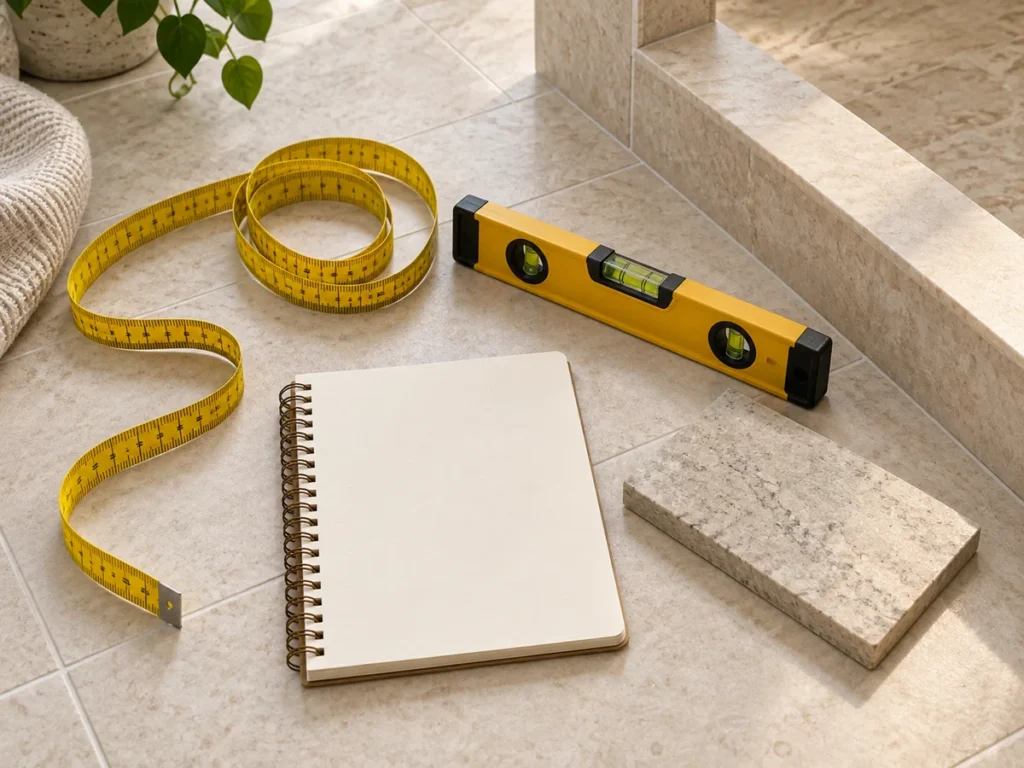
A sliding shower door can match your wall-to-wall opening and still be unsuitable for the ledge beneath it. Before ordering, check the usable mounting depth of the shower base or tub rim, then compare it with the instructions for the exact door configuration. Curb height alone does not confirm fit.
This guide focuses on the surface where the door hardware will sit. For the rest of your opening measurements, use our finished-opening measurement guide.
Three measurements that answer different questions
Opening width runs from finished wall to finished wall. Usable mounting depth runs from front to back across the part of the ledge available for the specified hardware. Curb height is the vertical distance from a stated floor reference to the curb top. Record the reference point, because the inside and outside floors may be at different elevations.
Also distinguish the shower base or curb from a door kit’s metal threshold or water-retaining strip. A search result for “shower threshold” may describe either. Buying a replacement strip does not establish that the shower base can accommodate a different complete door.
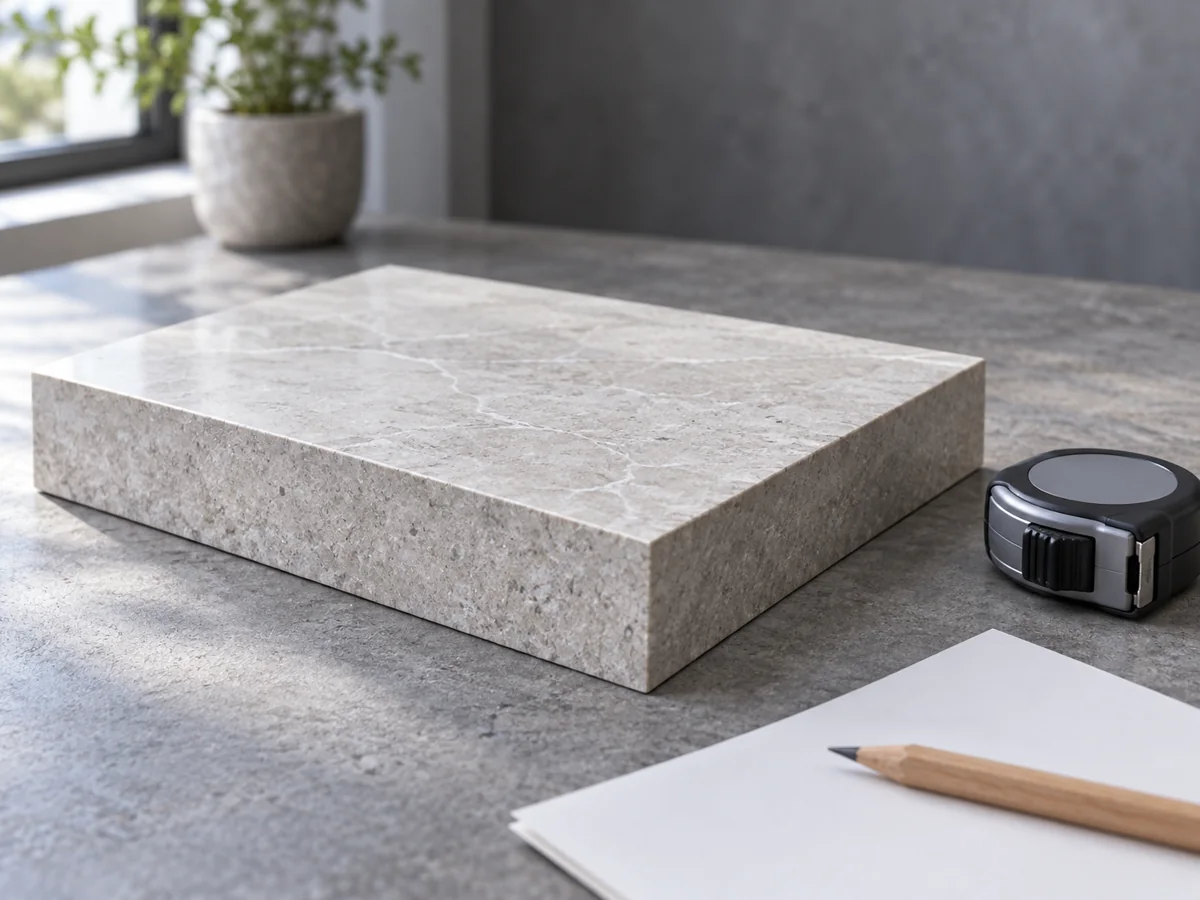
Record the available mounting surface
Start with the finished base and wall surfaces. Photograph the whole ledge, each end where it meets the wall, and the edge profile. Place a ruler or tape where its starting point and units can be seen clearly; keep tools away from glass edges.
Record the front-to-back top depth at the left, middle and right. Note rounded edges, a curved wall transition, grout joints, raised lips or existing hardware that may reduce the area available at the specified mounting line. Keep the full ledge measurement and the potentially usable portion separate. If that portion is difficult to define, send the photographs to support rather than rounding up.
Describe the material and anything you can observe about the surface. Do not assume that a visually wide ledge is a suitable mounting surface, or infer the structure and waterproofing underneath from a photograph. Ask your installer and the base manufacturer to confirm those conditions.
Match the ledge to the exact door instructions
Find the selected door’s model, opening-size option and installation manual. Look for the required mounting depth, locations of the bottom guide or rail, wall contact area, corner conditions and installation clearance. Check whether the manual applies to your configuration and revision.
The terminology can vary. Delta’s measurement guide treats sill depth as a separate measurement and directs buyers to the specific product instructions. That is useful reading practice; its brand-specific allowances should not be transferred to another door.
As another example, KOHLER instruction document 1581090-2-B, “Confirm Ledge and Wall Compatibility”, checks ledge and wall conditions separately. Use that document only for doors it covers. For an AROJAY purchase, obtain the matching AROJAY instructions and confirmation of any missing mounting requirement.
Check level and drainage as separate conditions
A ledge’s condition from wall to wall and its front-to-back profile describe different things. Record what you observe in each direction and have the installer compare it with the door and base instructions. A general online slope recommendation does not prove that a particular bottom guide can sit correctly on your base.
Do not sand, shim, build up, drill or reposition a mounting surface to make the measurements work based on this article. Those decisions depend on the actual base, waterproofing assembly and door instructions. Curbless installations and accessibility requirements also need a project-specific assessment.
A practical check for AROJAY sliding doors
The current AROJAY double-sliding shower door page offers configuration details and asks buyers to confirm threshold space and the applicable instructions. An opening-size match is one part of selection. If the mounting-depth requirement for your selected option is unclear, ask before ordering; this guide does not supply a substitute dimension.
Send support: the product link and selected configuration; photographs of the ledge and both wall junctions; your recorded front-to-back dimensions; base material and model if known; and any uncertain surface conditions. Ask: “Does this finished base satisfy the mounting requirements for this exact door, and which manual confirms that?”
Before you place the order
Keep a simple record with four entries: required mounting depth and its source; measured available surface; installer/base-manufacturer confirmation; unresolved questions. A missing value stays unresolved. Choose a different confirmed configuration or pause the purchase if compatibility cannot be established.
Continue with the installation preparation checklist, browse current AROJAY configurations, or ask Support with your measurements. For water-management planning, see what affects shower-door water containment.
Sources checked October 29, 2026: the linked AROJAY product page, Delta measurement guide and KOHLER installation document. External manufacturer examples explain what to verify; they do not certify AROJAY compatibility.