
A squeaky shower door needs a closer description before it needs a spray. A sound near a hinge, a sliding guide or a rubbing seal can point to different questions. Record where and when the noise occurs, identify your door configuration, and use the matching manufacturer instructions before choosing a treatment.
Start with a visual check from a safe position. If the glass is chipped or cracked, the panel is unstable, or hardware appears loose or missing, stop using the door and contact the manufacturer or a qualified installer. Do not operate a suspect panel just to make a recording.
Describe the movement, not just the sound
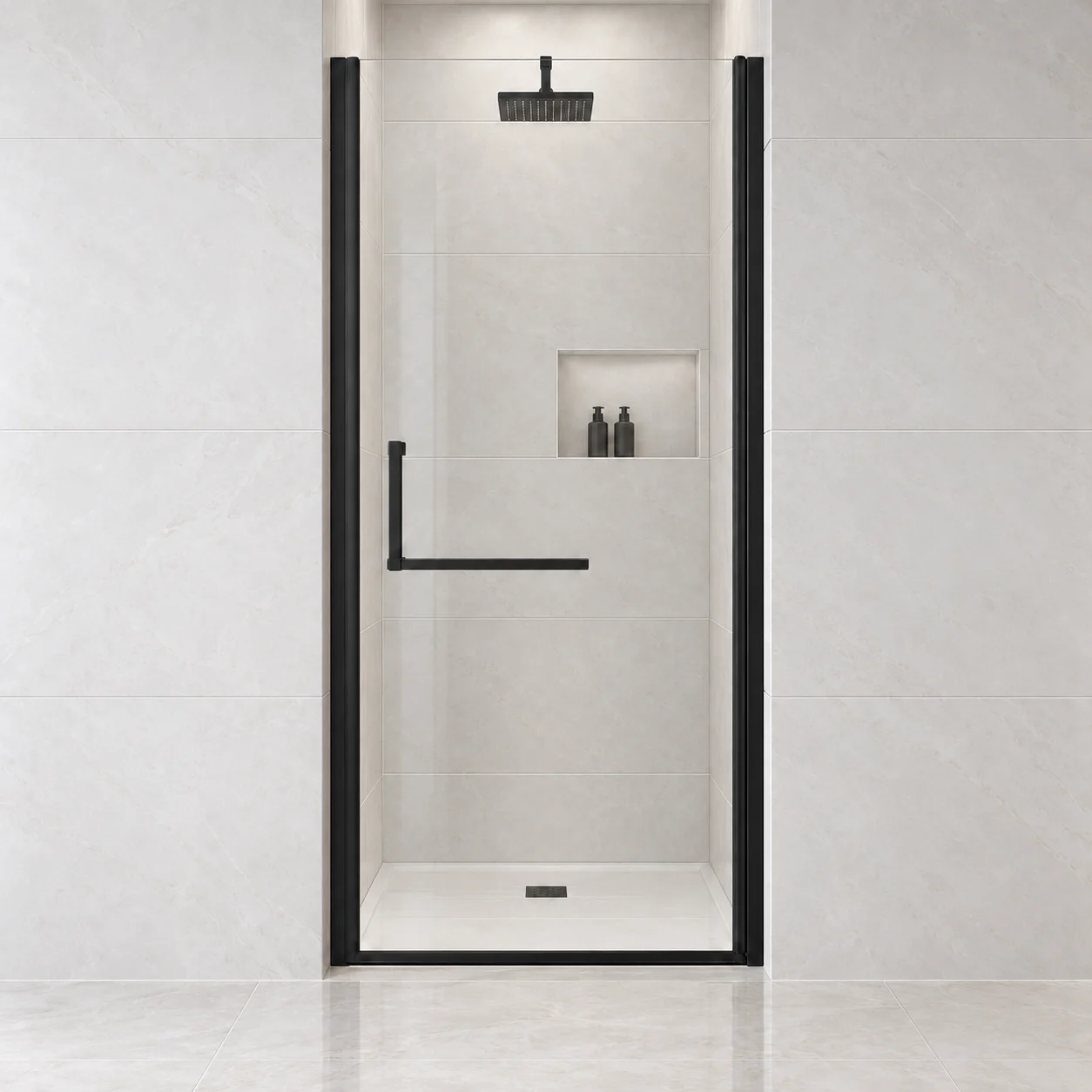
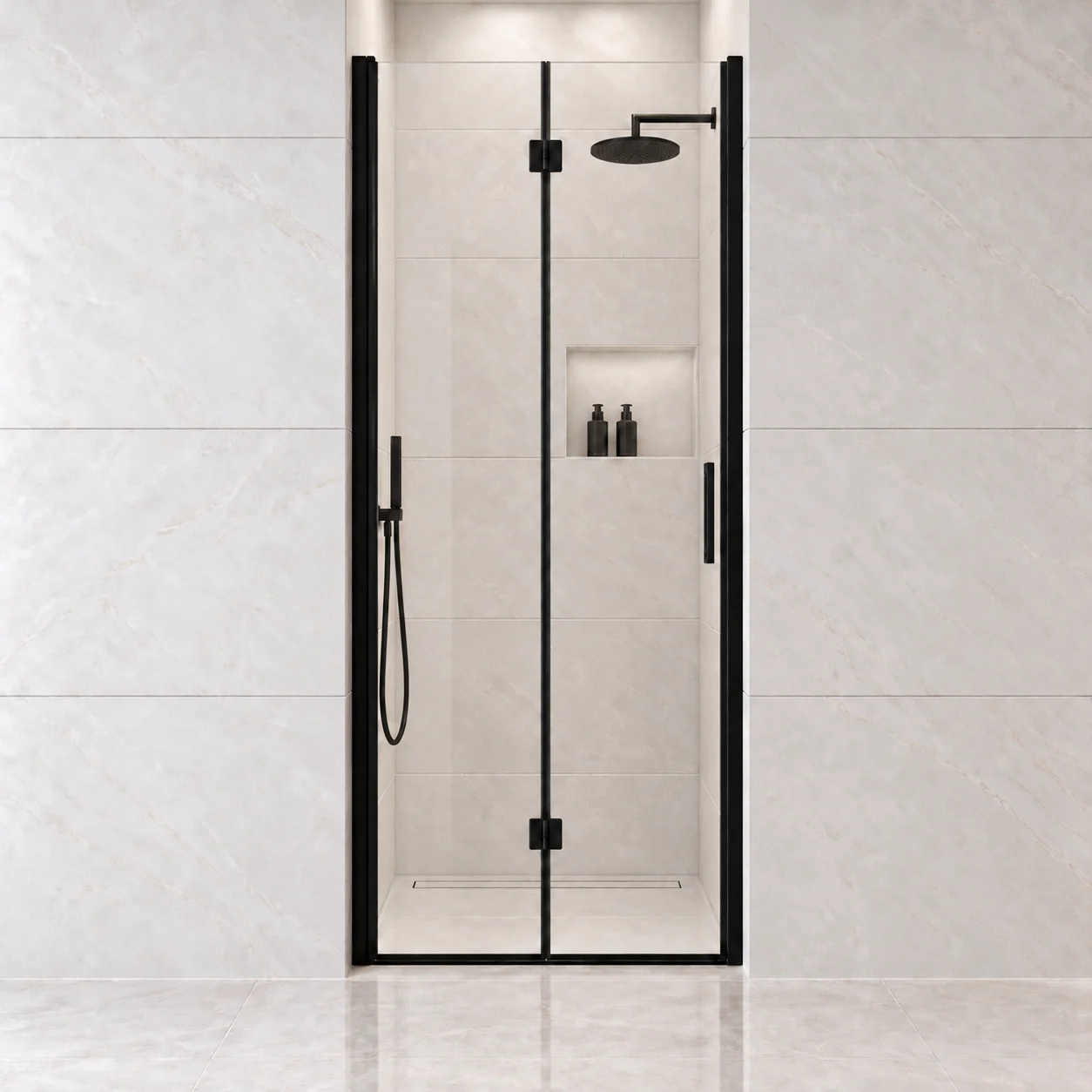
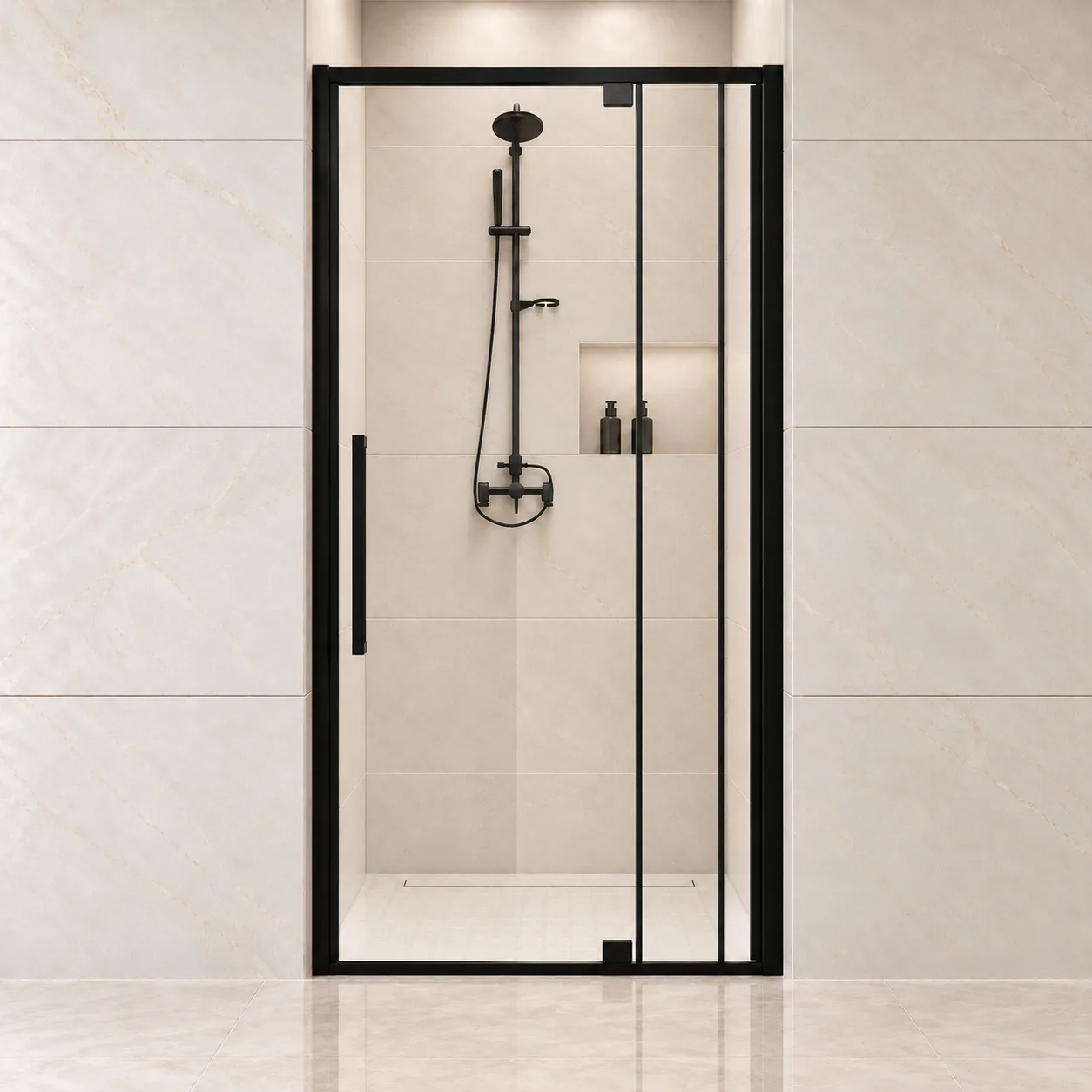
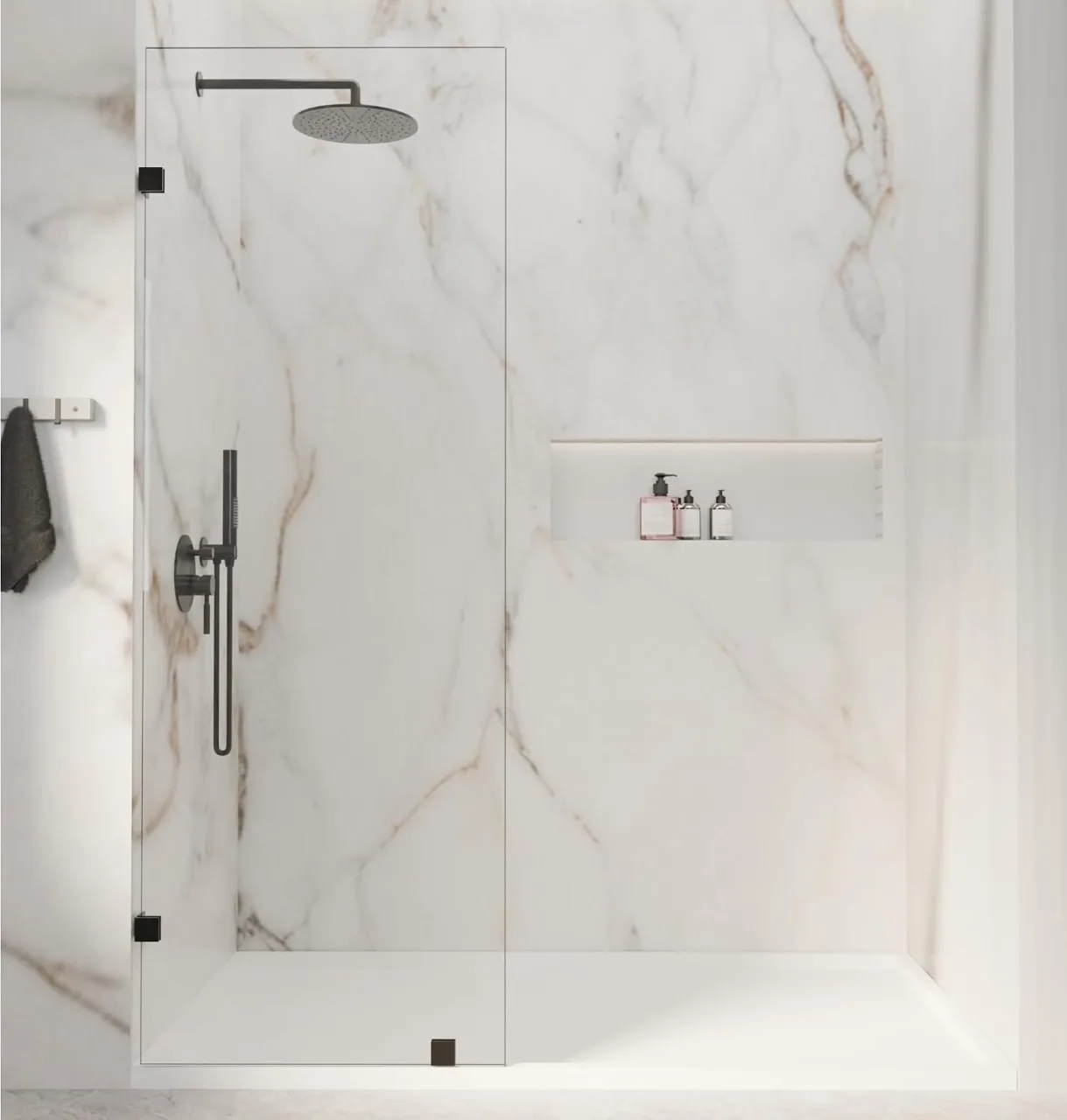
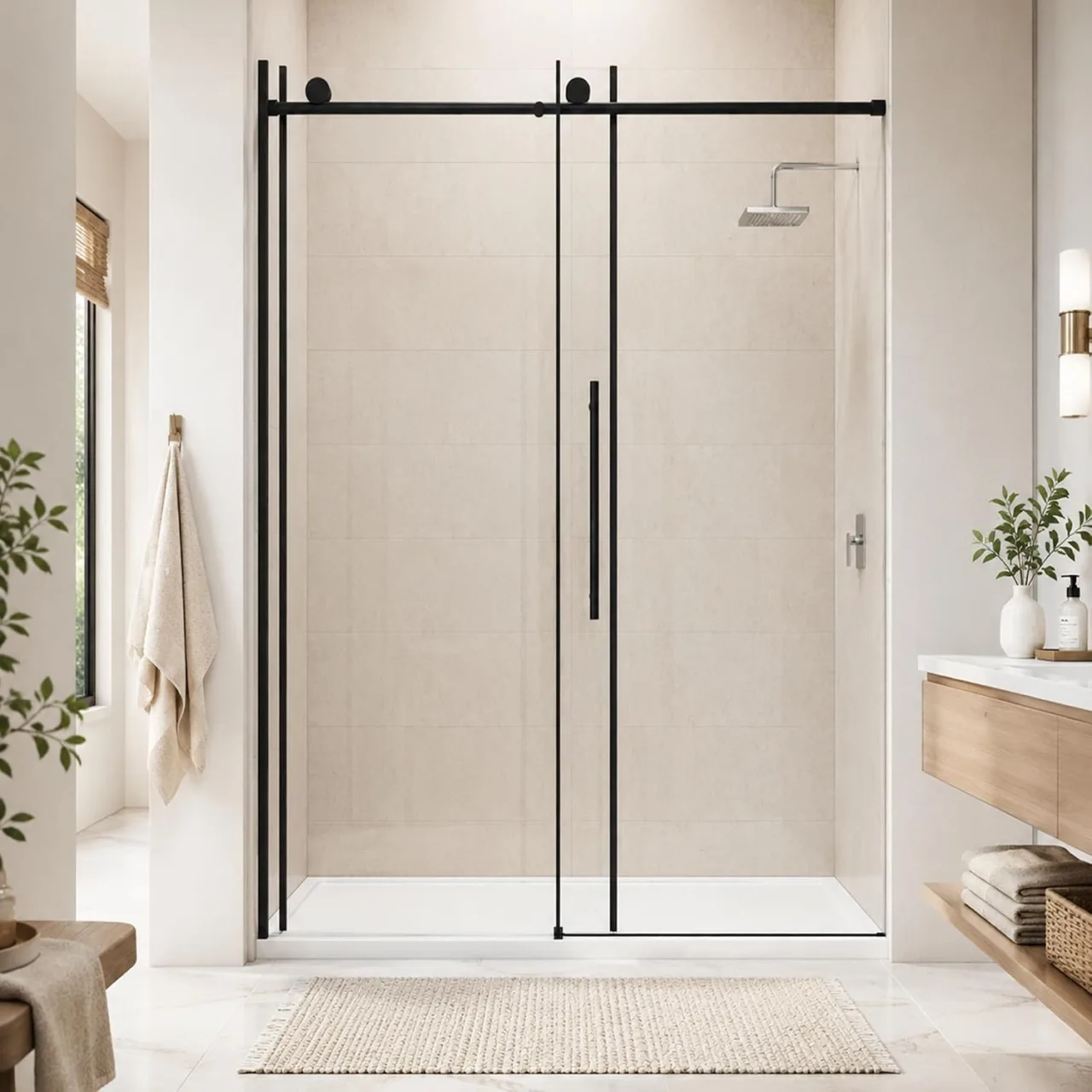
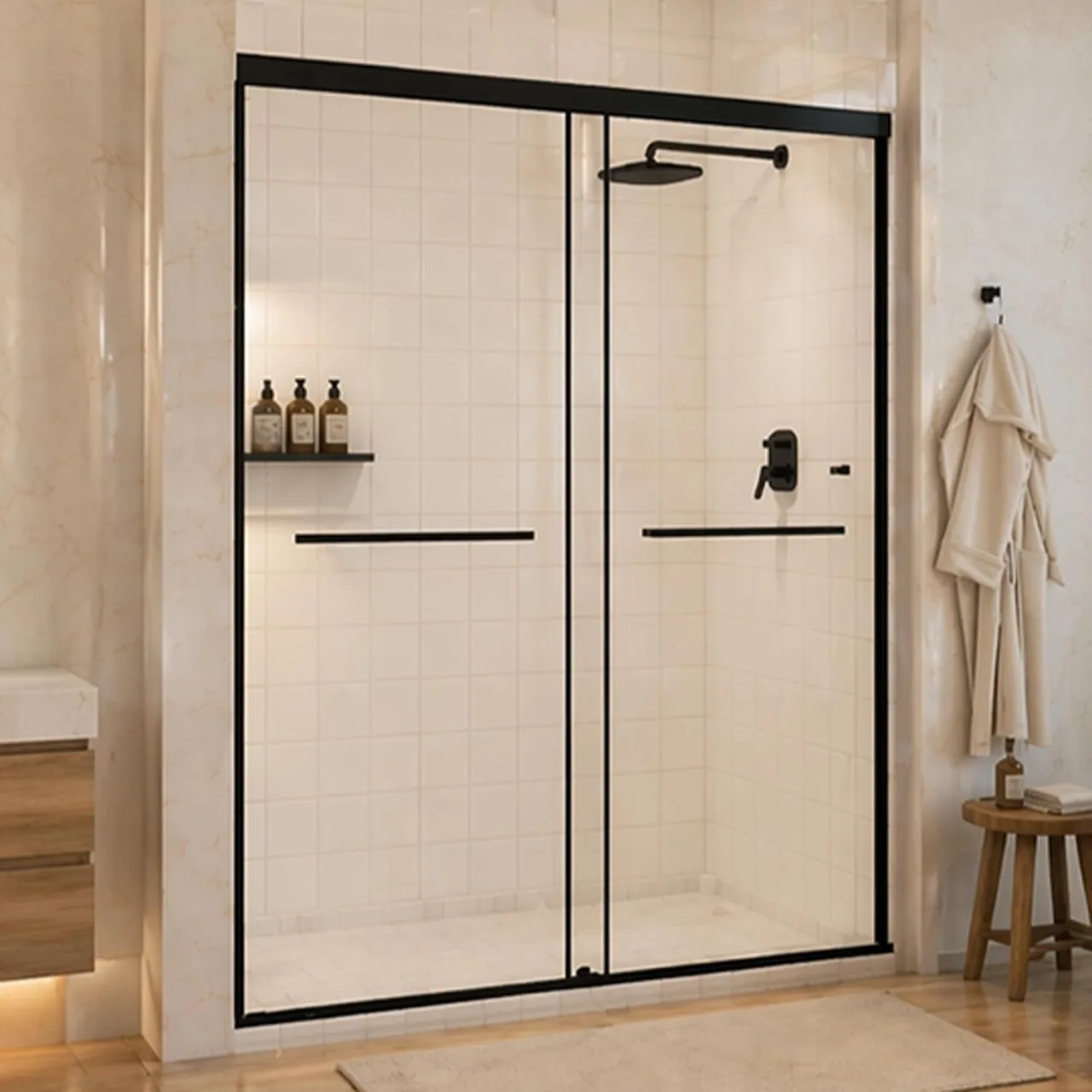
First, note whether the door swings, folds or slides. “Frameless” describes appearance and construction; it does not identify the operating mechanism. A remedy for a wall-mounted hinge does not automatically apply to a pivot or sliding roller.
For AROJAY, the current double-sliding configuration and hinged configuration are separate product families. Use the product and model information for the door you own. If you are still identifying the mechanism, our opening-style guide can help with vocabulary.
Listen for where and when it happens
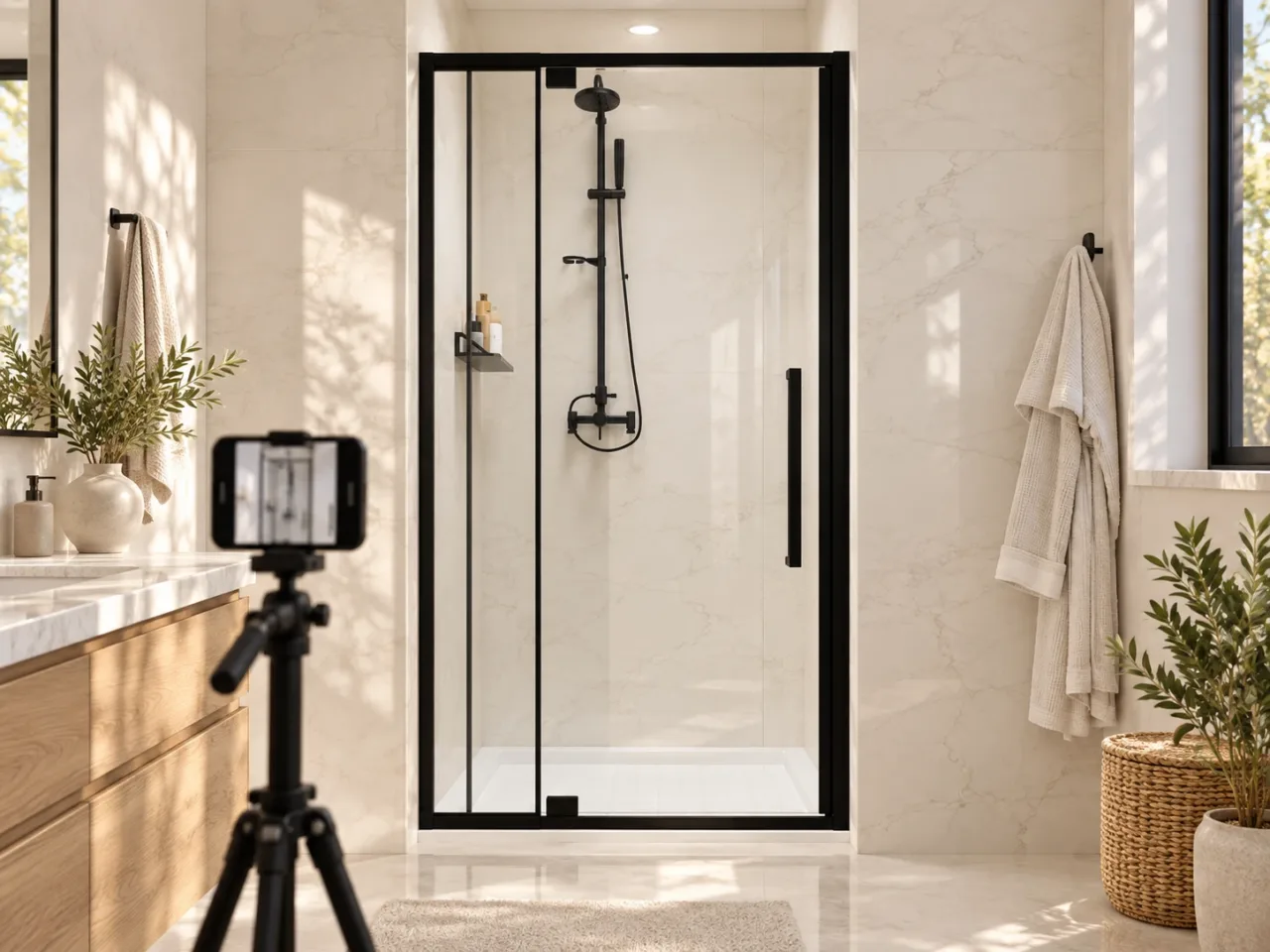
If the panel is stable and moves normally, record a short video with sound during ordinary operation. Keep your phone clear of the moving glass. Note whether the sound begins with movement, repeats throughout travel, occurs at one position, or happens only as the door closes. Stop if it catches, scrapes against a hard surface or becomes difficult to move.
Hinged or pivot door: describe whether the sound seems near an upper or lower mounting point, or near the bottom edge. Note whether it occurs while opening, closing or both. A sound’s apparent location is a useful clue, not proof that a particular hinge has failed.
Sliding door: record the affected panel and direction of travel. Note whether the sound seems near the upper rail, a bottom guide or the overlap between panels. Photograph accessible debris or visible contact without removing a cover, lifting a panel or reaching into moving hardware.
Possible seal contact: note whether a flexible strip visibly brushes a wall, another panel or the ledge when the sound occurs. A photo of the contact can be more useful than calling every noise a “bad hinge.” Leave the strip in place until the appropriate instructions are confirmed.
Also separate operating noise from cleaning-tool noise. A squeegee squeaking across stationary glass is a different problem from the door squeaking when it moves.

Why there is no universal shower-door lubricant
Manufacturer troubleshooting can distinguish several kinds of noise and several mechanisms. The Bohle/Portals “Noisy Shower Doors” sheet, for example, discusses clicking/popping separately from creaking/rubbing for named hinge families. Its instructions apply to those hinges; they do not establish an AROJAY maintenance procedure.
Similarly, Delta’s Traditional installation FAQ distinguishes guide placement and component interference in its sliding system. These examples show why the mechanism and manual matter. They do not diagnose your door from its sound alone.
Before applying oil, grease, silicone spray, solvent or a household substitute, ask whether the exact product is approved for your model, finish and intended application point. This article does not verify a lubricant for any AROJAY configuration. Do not loosen glass clamps, adjust rollers, trim seals or remove panels using a generic online tip.
Copy this symptom record for Support
Product: brand, model/SKU, product link and purchase reference if available.
Movement: hinged, pivot, bifold or sliding; affected panel or side.
Timing: opening, closing or both; start, middle, end or one repeated position.
Sound: squeak, rub, click, scrape or rattle, in your own words.
Associated behavior: resistance, visible contact, changed gaps or instability.
History: when it began; recent installation, cleaning or service; any treatment already applied.
Attachments: overall door photo, accessible detail photos and a short video only if normal operation is safe.
Describe uncertainty plainly: “It sounds louder near the top rail” is better than declaring that a roller must be replaced. Keep model identification and your observations together so support can choose the correct next step.
Choose the next step for the door you own
Send your record through AROJAY After-Sales or Support. Keep the matching instructions from the installation center available. For a third-party door, contact that manufacturer; AROJAY instructions should not be used as a repair manual for another brand.
If you are considering a replacement, first establish what the current problem is. A noise alone is not enough to decide that the whole door must be replaced. Our replacement planning guide covers the separate task of evaluating a new complete door.
Sources checked October 29, 2026: linked AROJAY product pages, Delta Traditional installation FAQ and Bohle/Portals “Noisy Shower Doors” (2026.03). This article offers observation and support preparation, not a remote diagnosis or model-specific repair procedure.