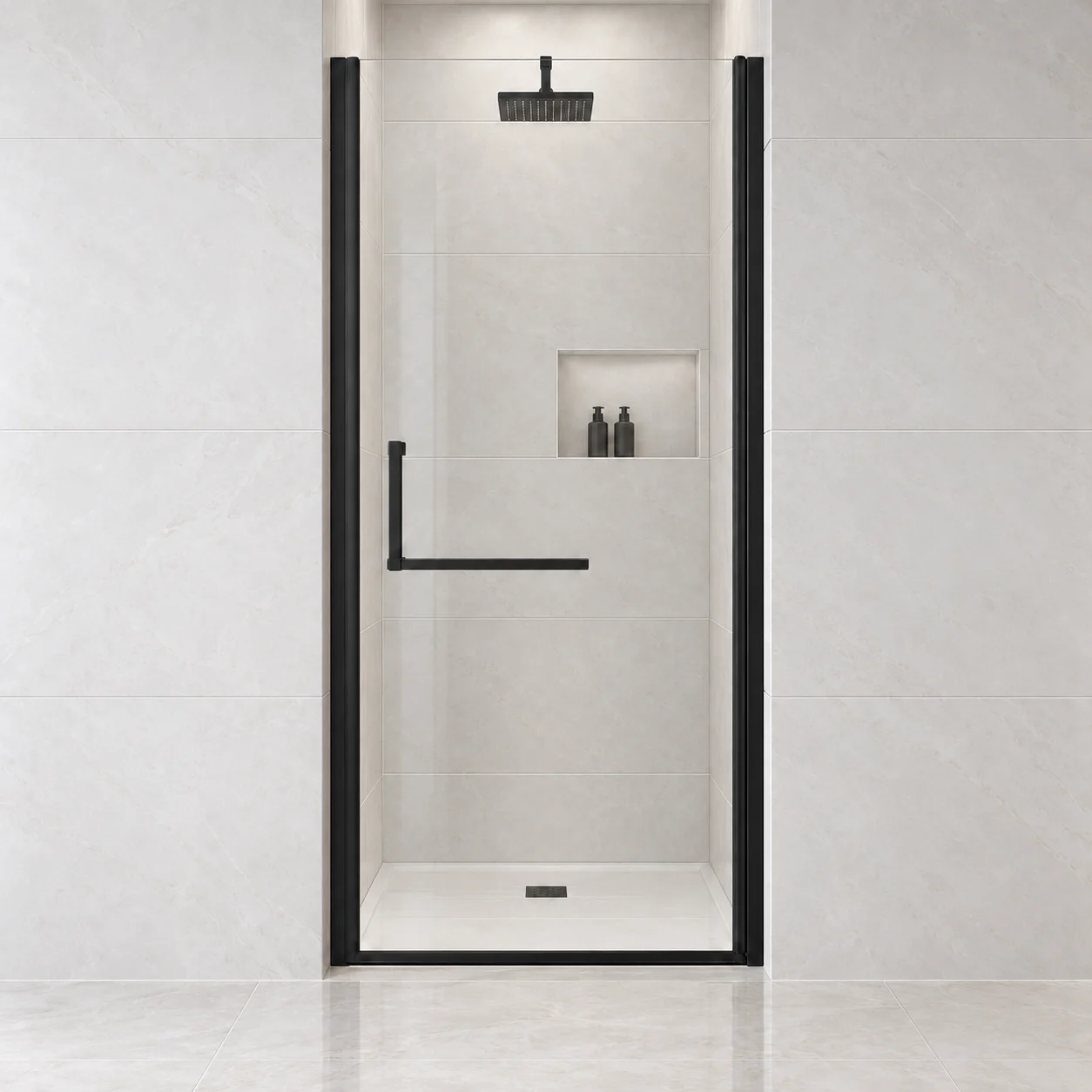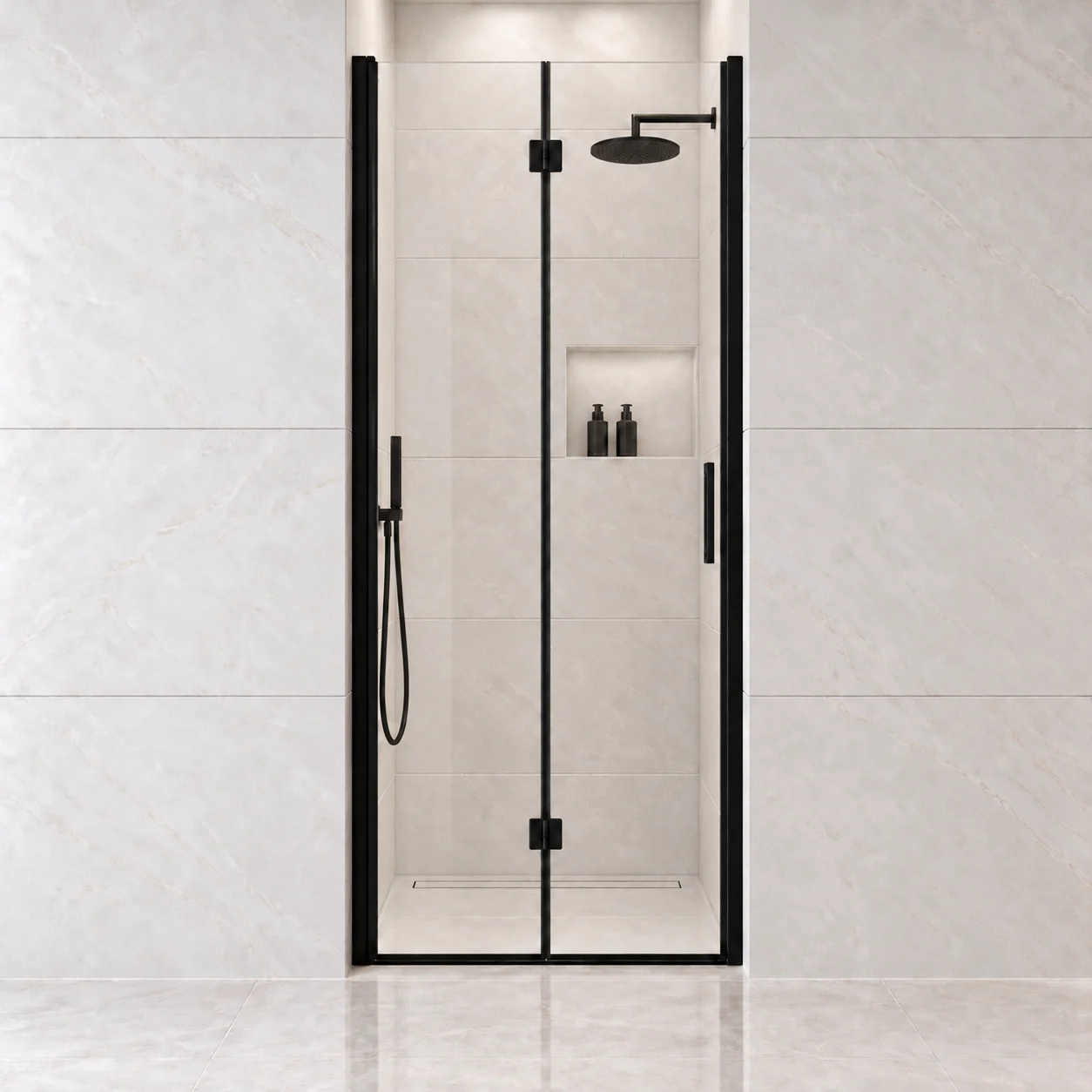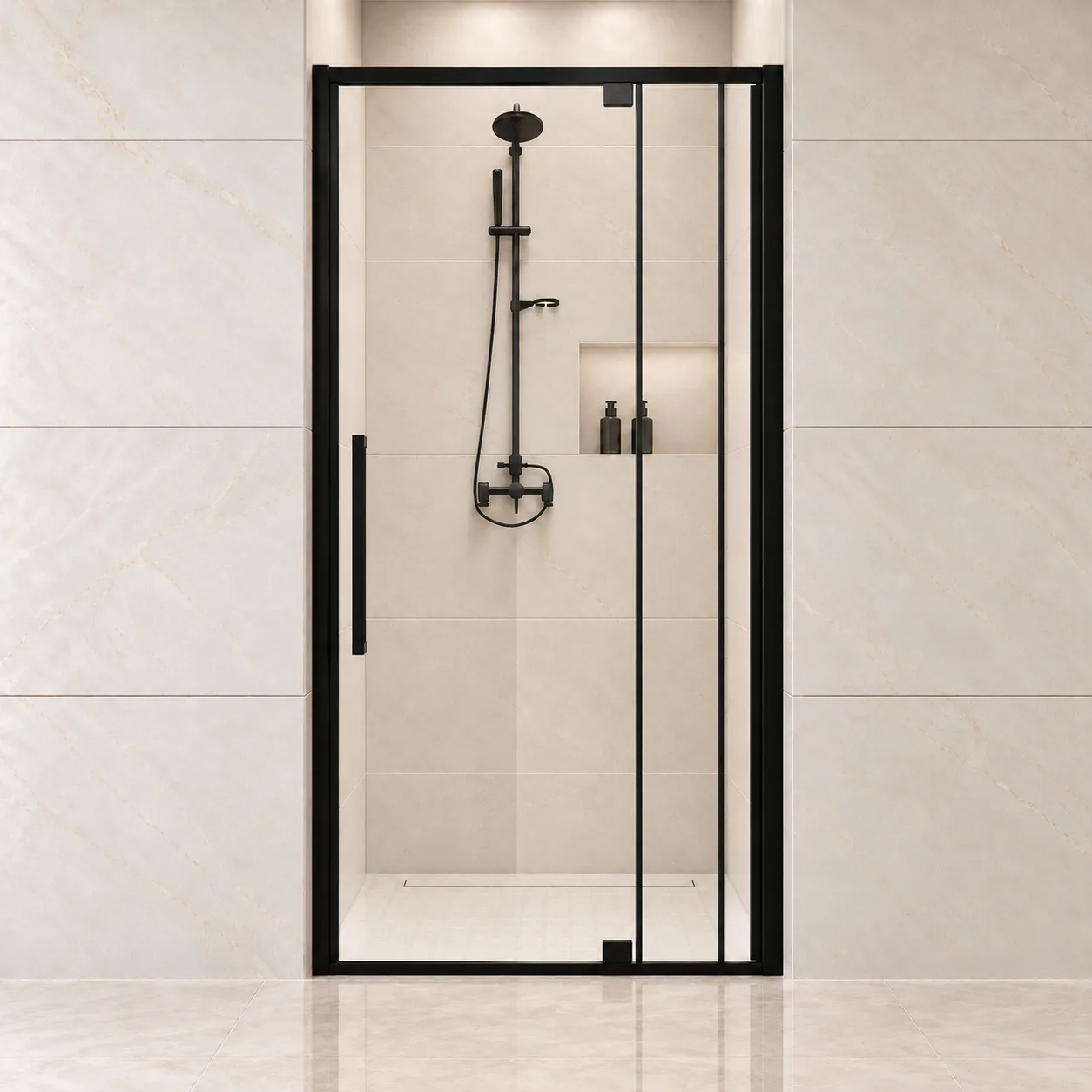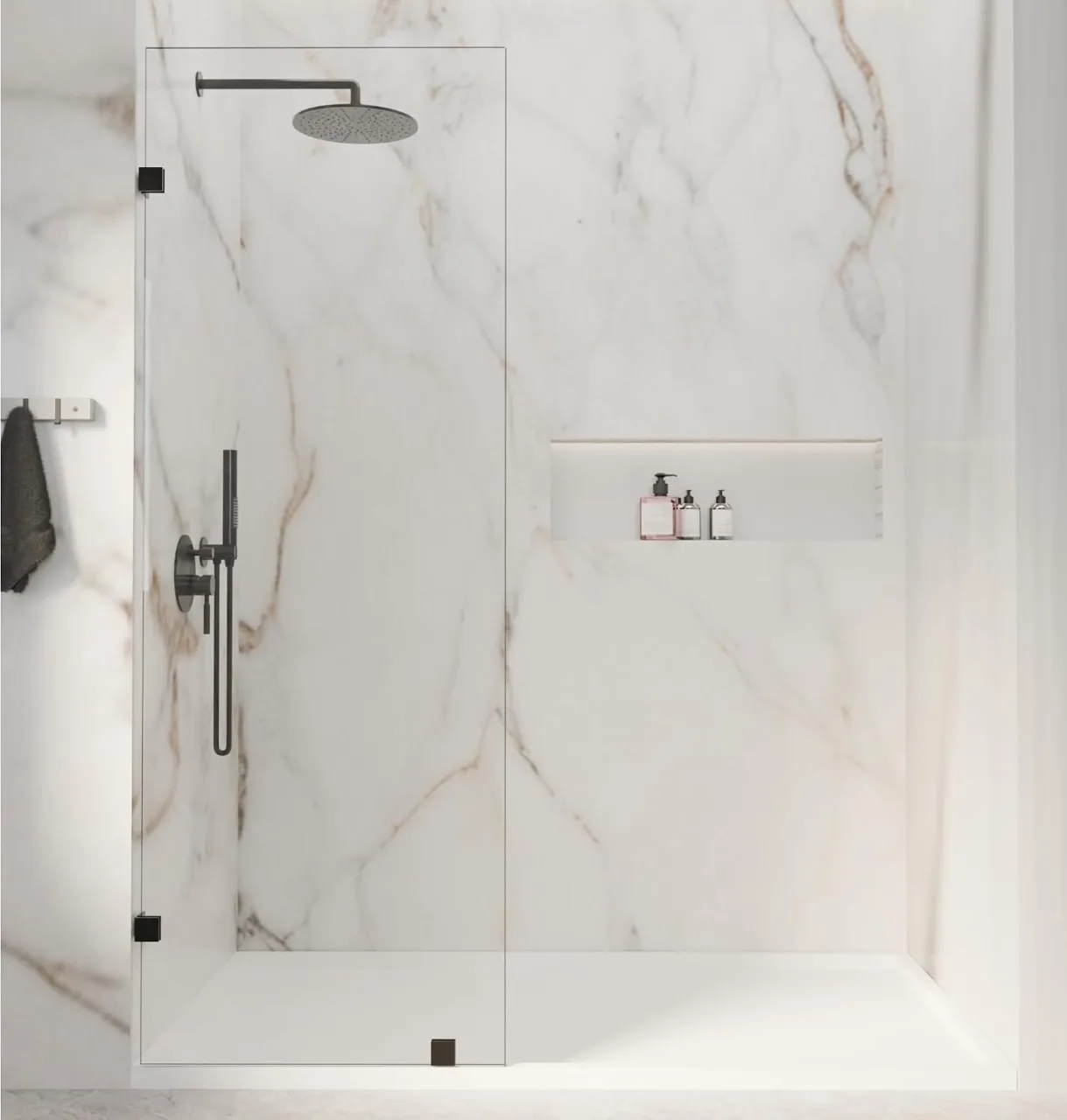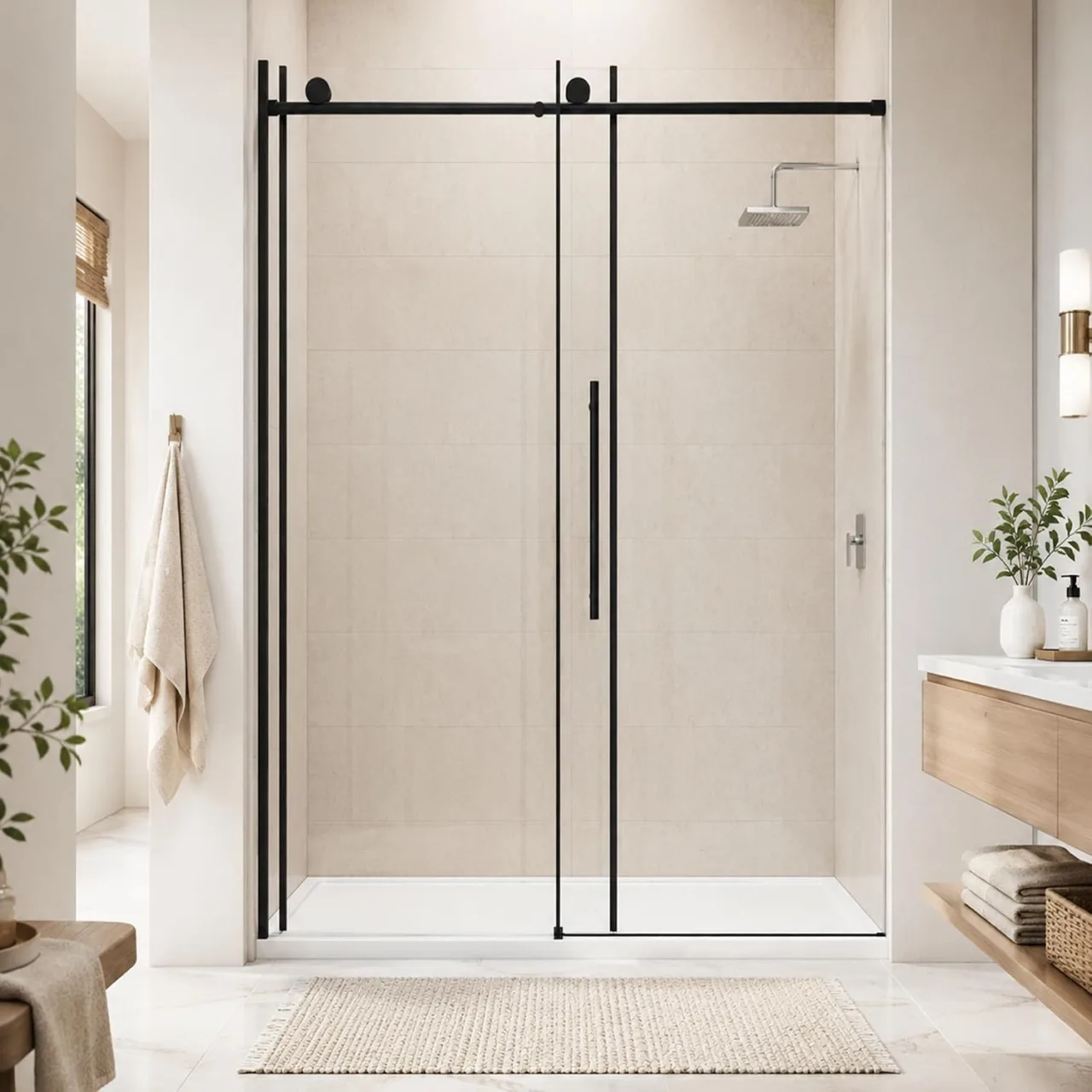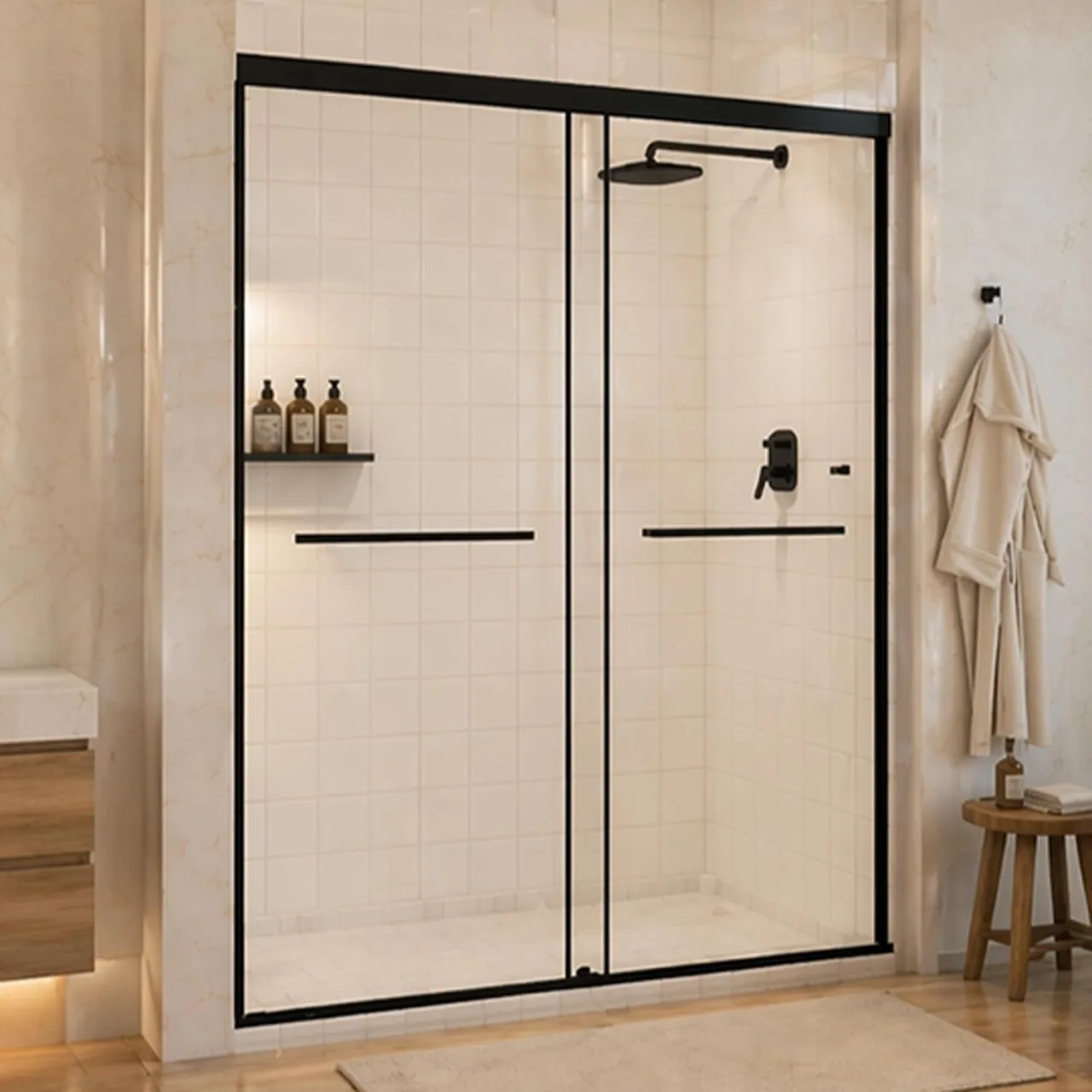
Bathroom lighting with glass shower doors is worth reviewing from more than one angle. Clear glass can show the shower interior and the reflection of a bright window or light at the same time. A room that looks calm in a daytime listing photo may look different during your normal evening routine.
Before choosing an enclosure, make a short observation log using the bathroom’s existing lighting. The aim is to describe what you notice and what you want to change. This is a visual design exercise, not a glare rating, a promise of a brighter room or a plan for electrical work.
Start with the views you use every day
Choose a few ordinary viewing positions: the bathroom entrance, the vanity and the normal approach to the shower. Note what is visible through the proposed glass area and where a window, mirror or bright fixture appears in that view. Keep the whole room in mind rather than judging an isolated strip of hardware.
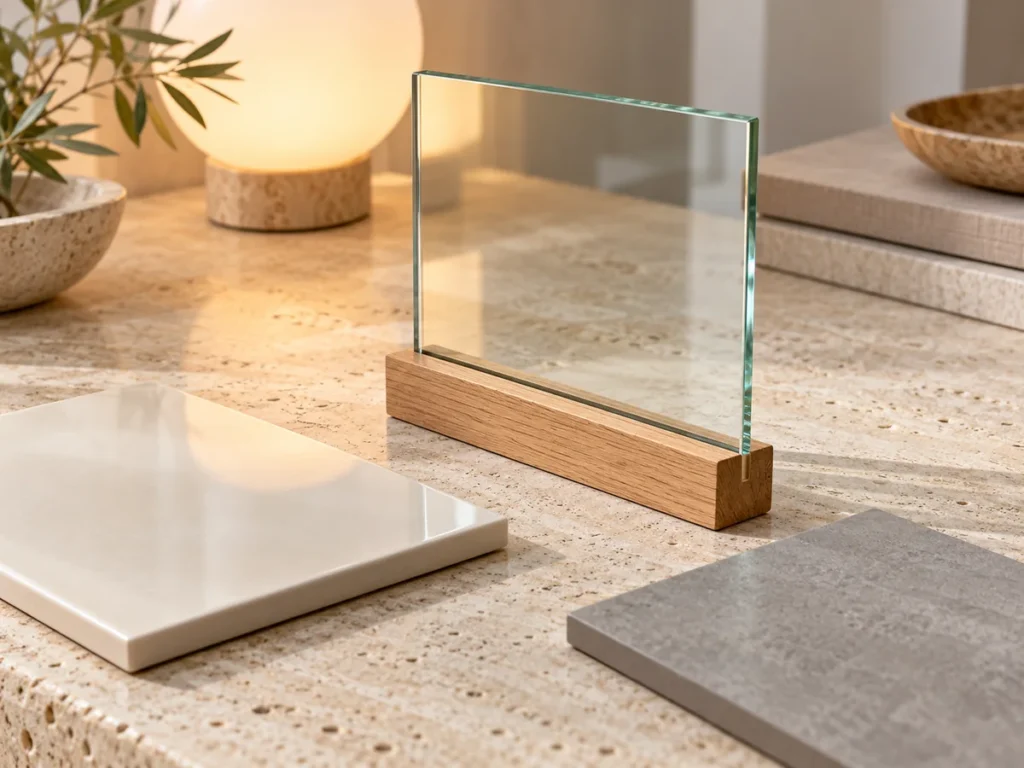
If there is already an enclosure, observe it as it stands. If there is no glass yet, describe the view and ask whether a representative sample or showroom visit would help. A small sample can start a conversation about appearance, but it cannot reproduce a full installed door, its orientation and all the surfaces around it. Do not move or balance a loose glass panel in the bathroom to simulate an enclosure.
Compare daylight and the lighting you use after dark
Record a daytime view, then return during your usual evening routine. List which existing lights are on in each observation. Ask simple questions: does a window become a strong highlight, is a visible bulb distracting, or does the shower interior feel visually quiet or busy? A second household member may notice a different reflection because they look from a different position.
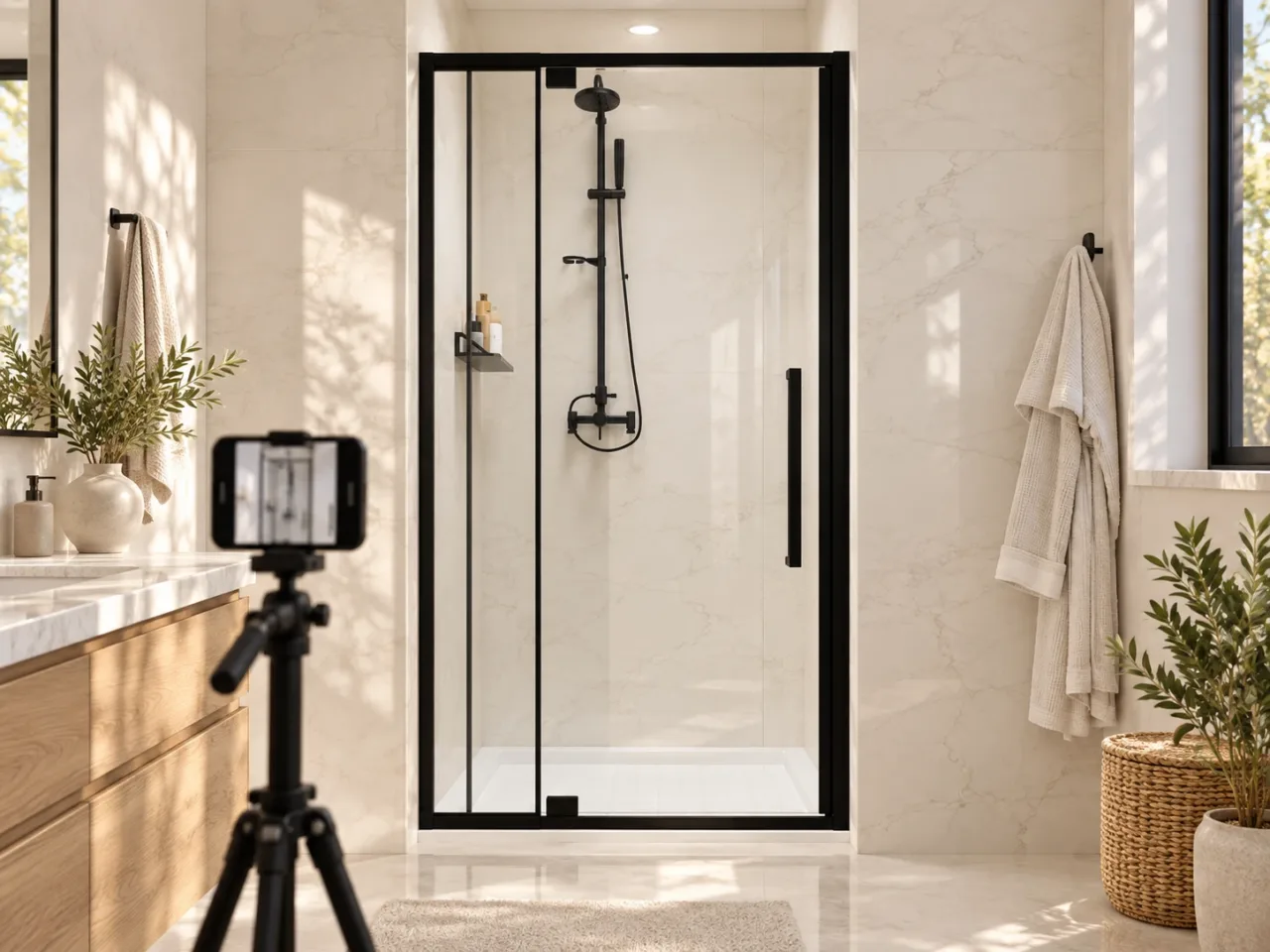
Photographs are useful reminders, but the camera’s exposure can make a bright source look softer or make a shadow disappear. Save the photo alongside a sentence about what you saw in person. Avoid treating the photograph as a measurement of brightness or as proof that a proposed fixture arrangement will be comfortable.
Keep a small observation log
| Viewing check | Record in your notes |
|---|---|
| Daylight at the bathroom entrance | Window position, visible highlights and which existing lights are on. |
| Evening at the vanity | Bright sources that catch your attention and repeated reflections in the mirror. |
| Normal approach to the shower | Whether your view changes as you move, plus what you would like the designer to review. |
Use descriptions such as “bright point visible near the handle from the doorway” instead of an unsupported conclusion such as “this glass needs a special coating.” Bring the log to a designer or lighting professional if a change is needed. A useful observation identifies the viewing position and the existing light combination, not just the word “glare.”
Review the mirror, fixtures and glass as one scene
The shower glass is one part of a room that may also contain mirrors, glossy tile and polished metal. Look for repeated highlights or reflections that draw attention away from the area you are using. Decide whether the concern is the visible light source, the view through the glass or a combination that needs a fuller room review.
In its bathroom lighting planning guidance, Kichler discusses how different light sources affect shadows and glare. That supports reviewing the lighting as a whole. It does not establish a universal fixture position, a glare-free result or an electrical specification for your bathroom.
Keep the design questions separate
A reflection concern, a privacy preference and a mounting question call for different decisions. For household sightlines, use the clear-glass privacy planning article. For the color palette, the warm-neutral bathroom ideas provide a separate starting point. Changing the glass appearance should not be assumed to solve every lighting concern.
If your review suggests changing a fixture, its location, a switch or the wiring, have an appropriately qualified electrical professional assess the actual project. A design image, a light described as suitable for a bathroom and this observation checklist do not establish suitability for a specific shower location. Do not improvise a test by placing a portable lamp in the shower.
Return to the actual door selection
Use your notes when comparing the visible lines and configuration of a real product, then check the finished opening and installation requirements independently. The AROJAY fixed glass panel and frameless sliding door illustrate different product formats to review; neither carries a room-specific lighting or glare promise.
Finish with two short lists: the appearance you want to keep, and the questions that need a professional or manufacturer response. Take those into the door-selection process. A considered choice brings the room observations and the documented fit requirements together without letting one stand in for the other.