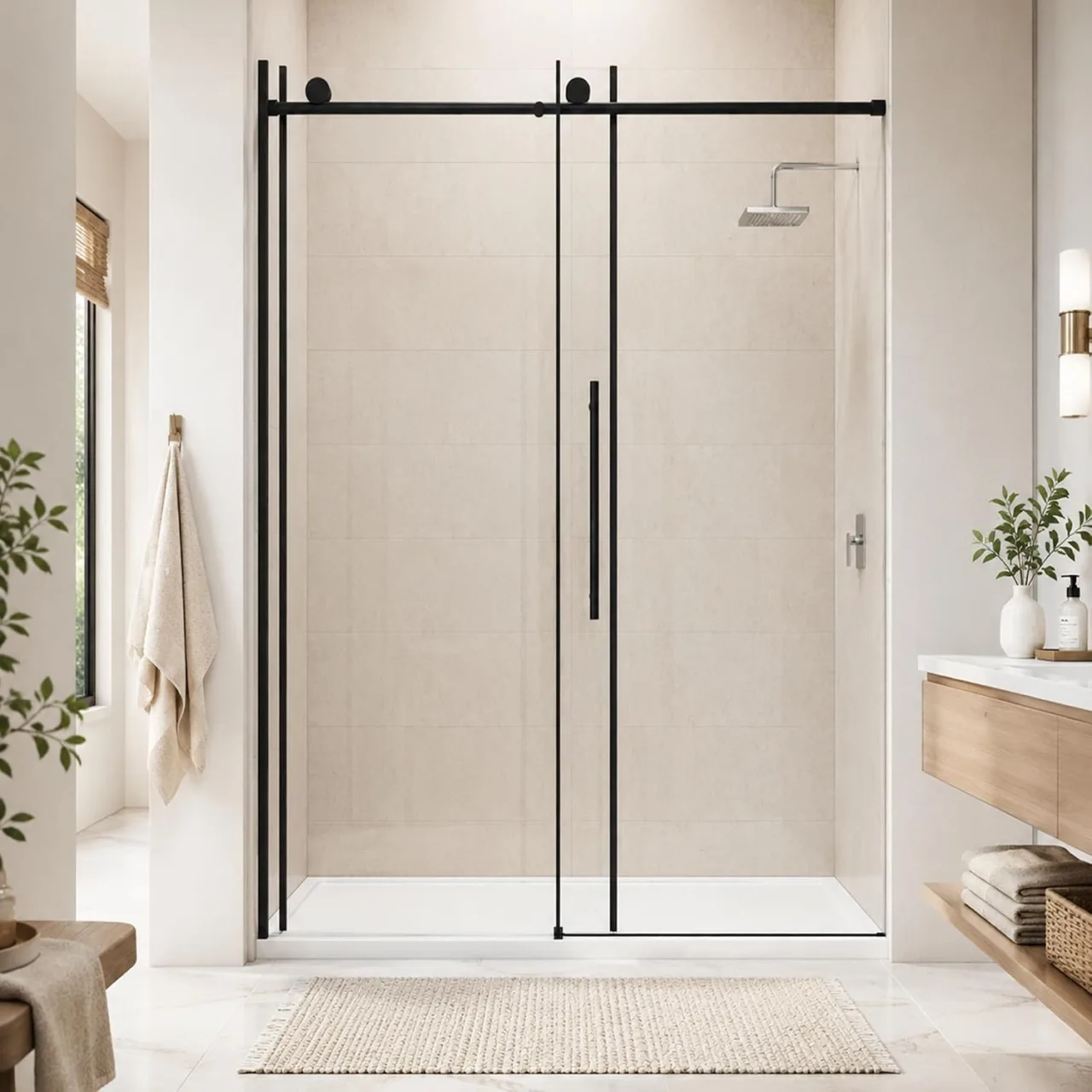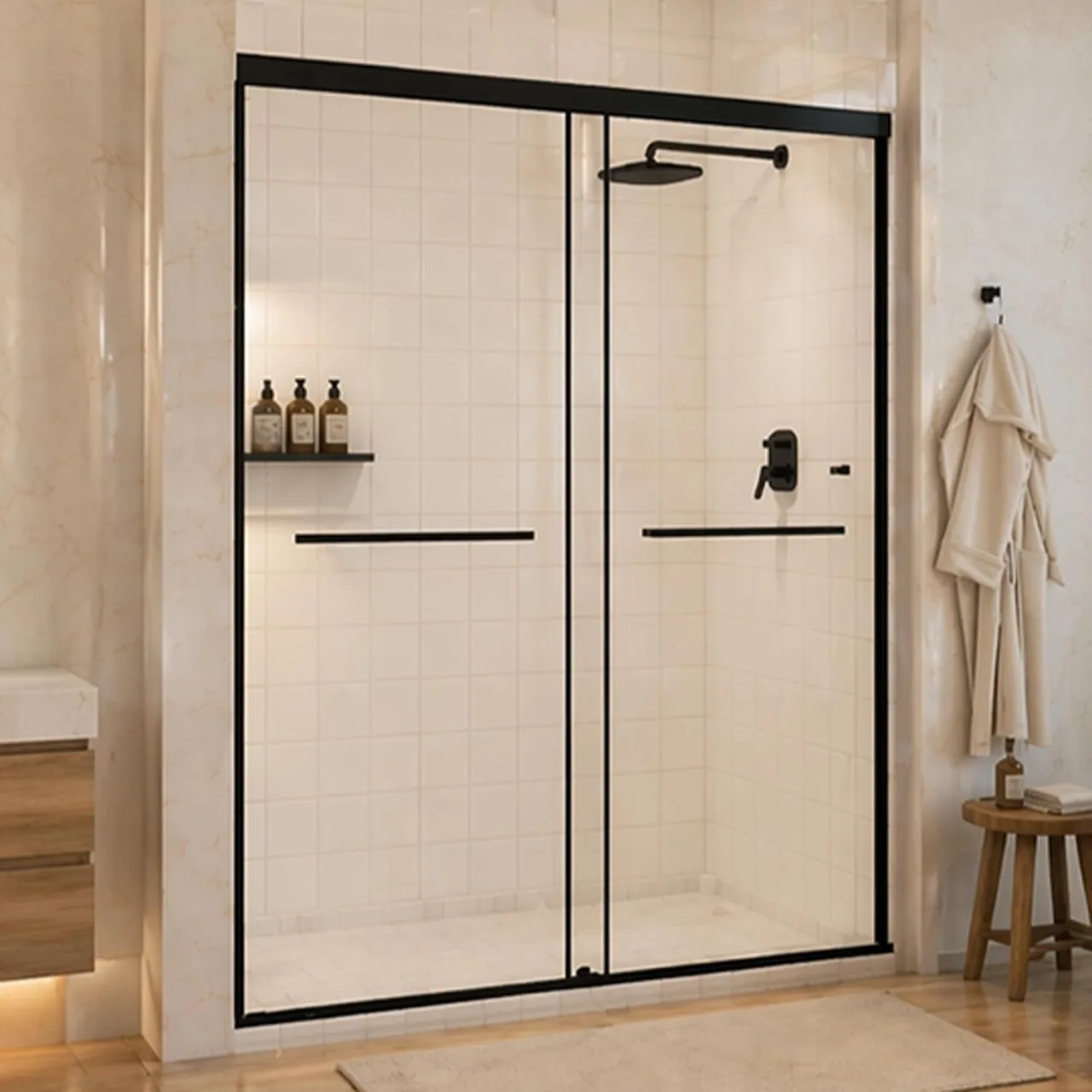
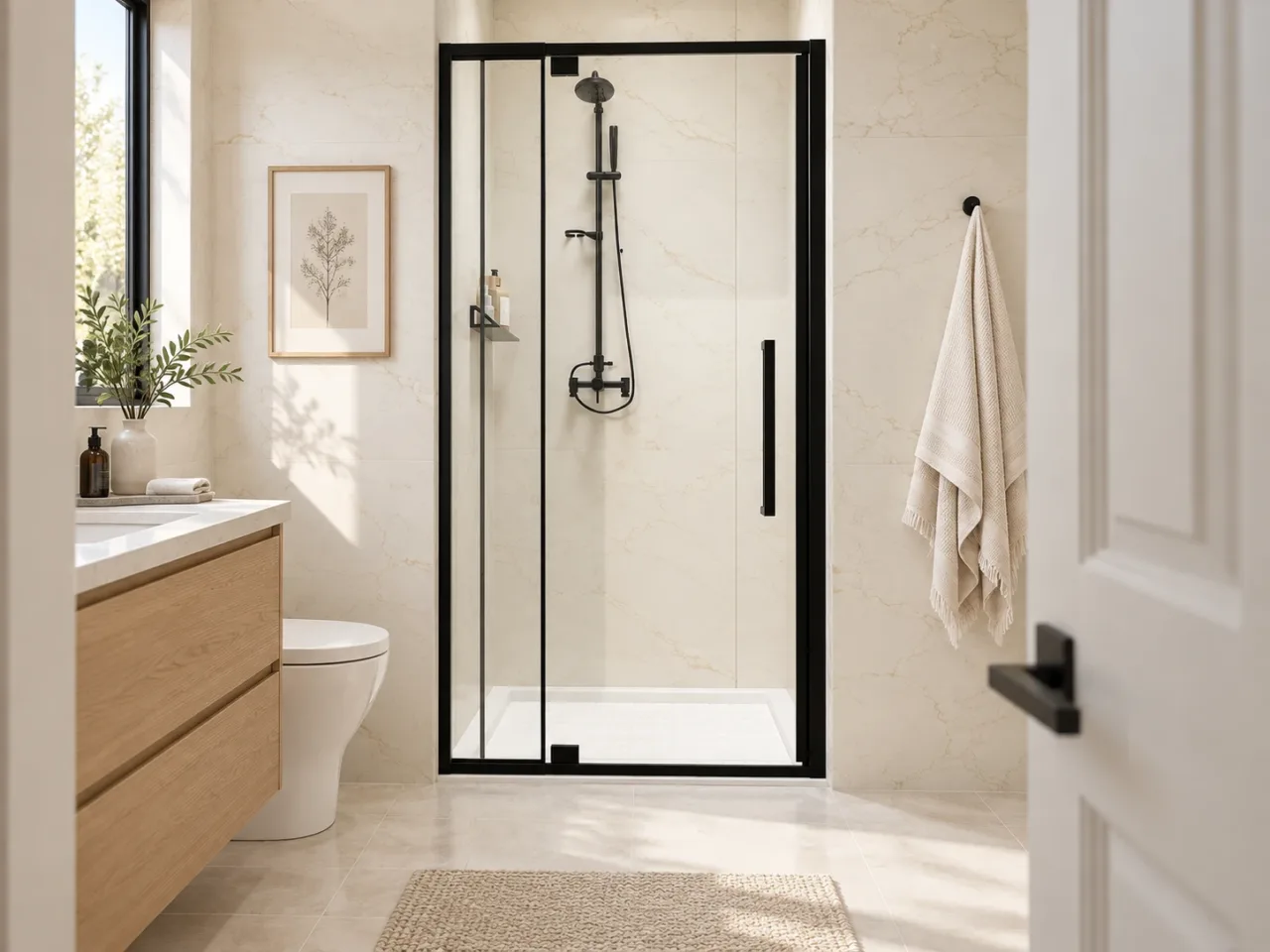
- Start with the bathroom entrance
- Check other sightlines
- Separate visual openness from personal comfort
- Do not assume an aftermarket treatment is compatible
- Keep the decision separate from fit
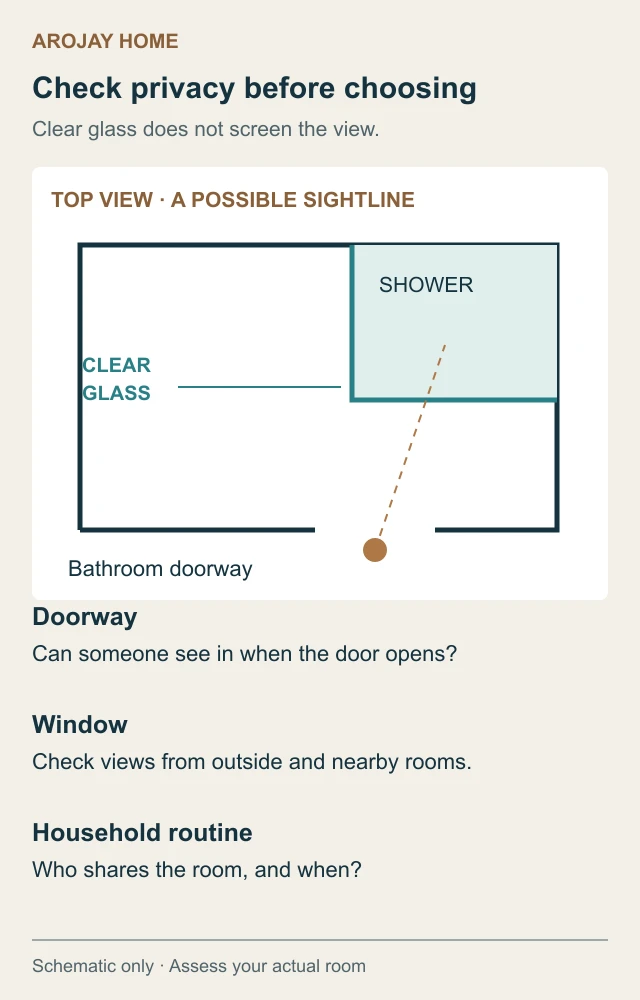
Start with the bathroom entrance
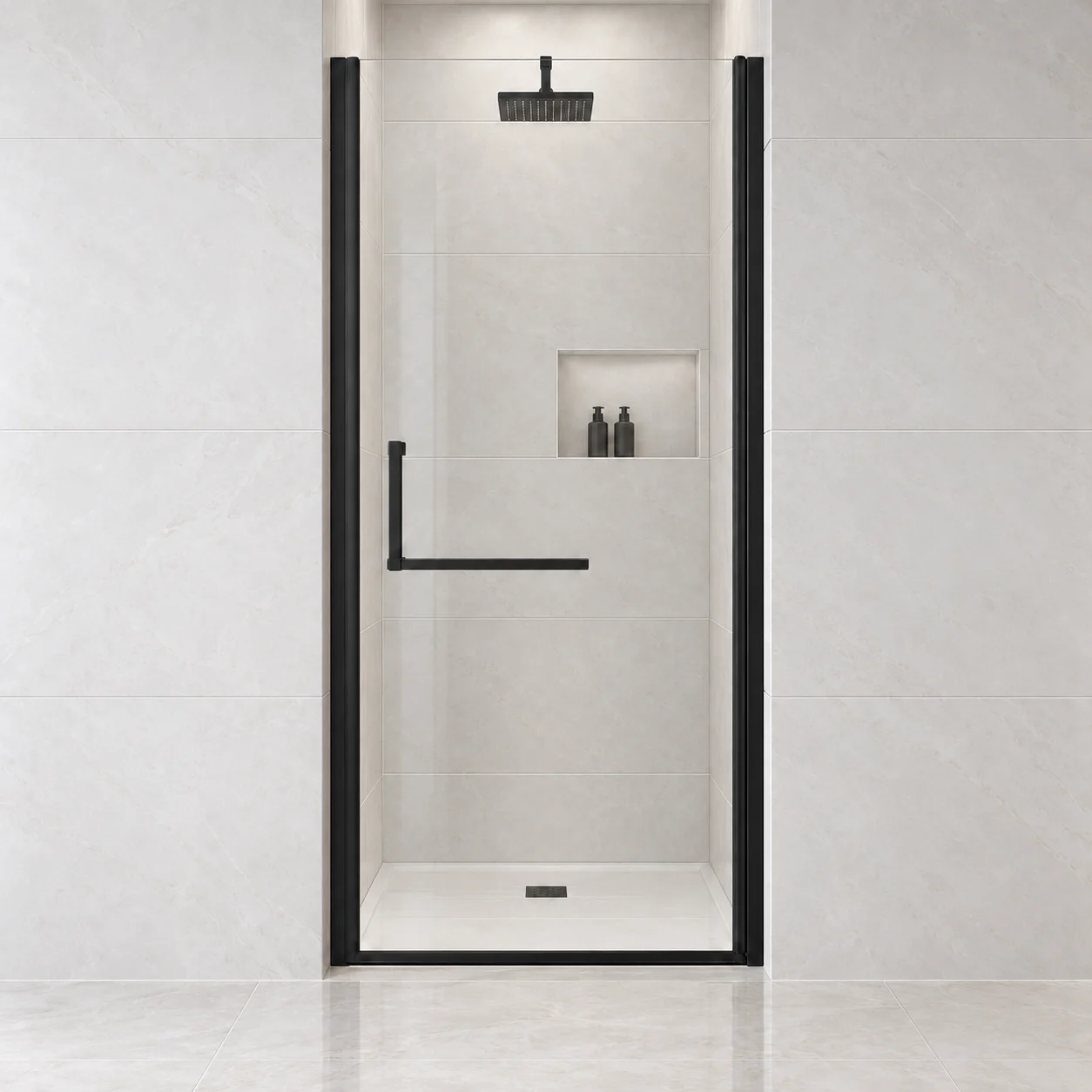
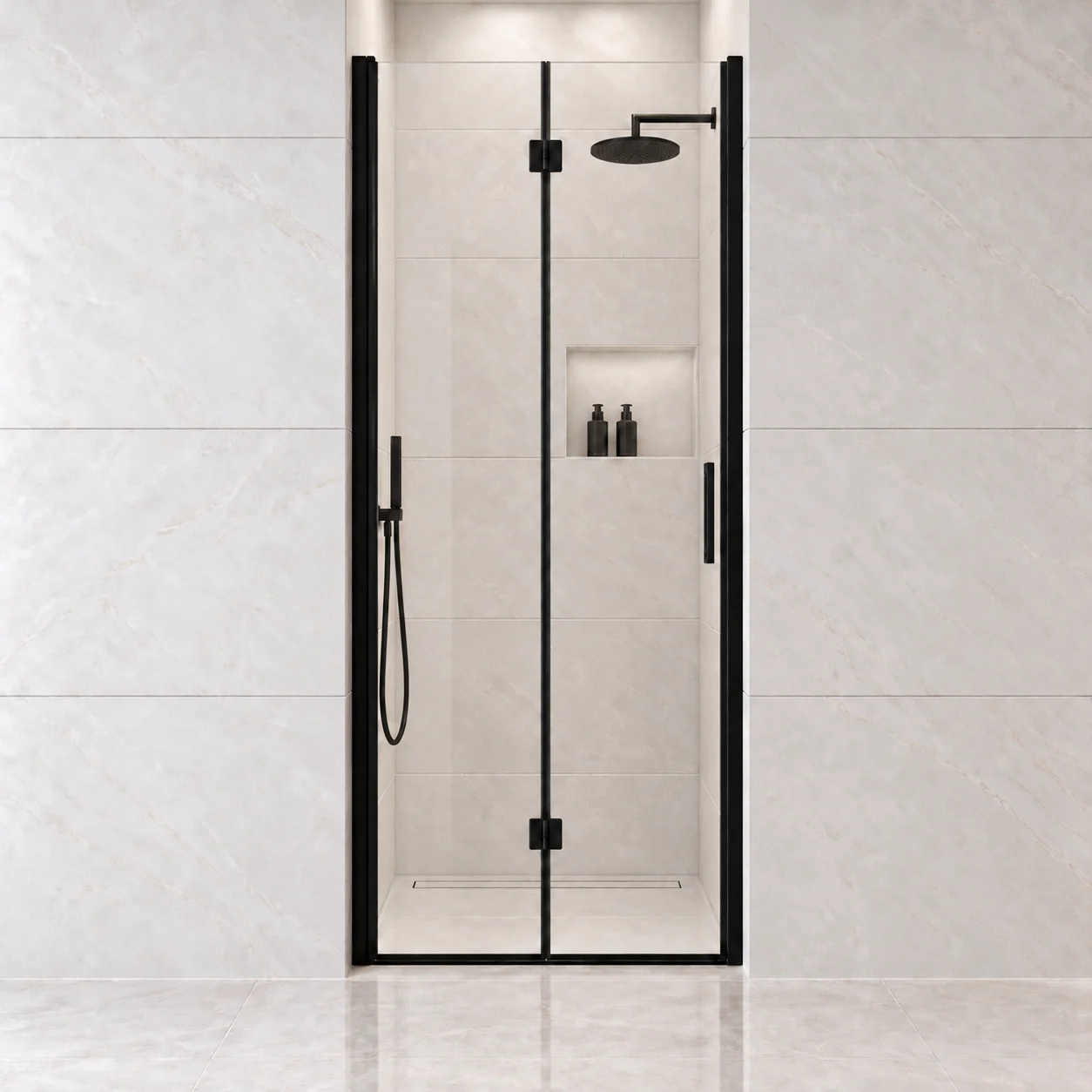
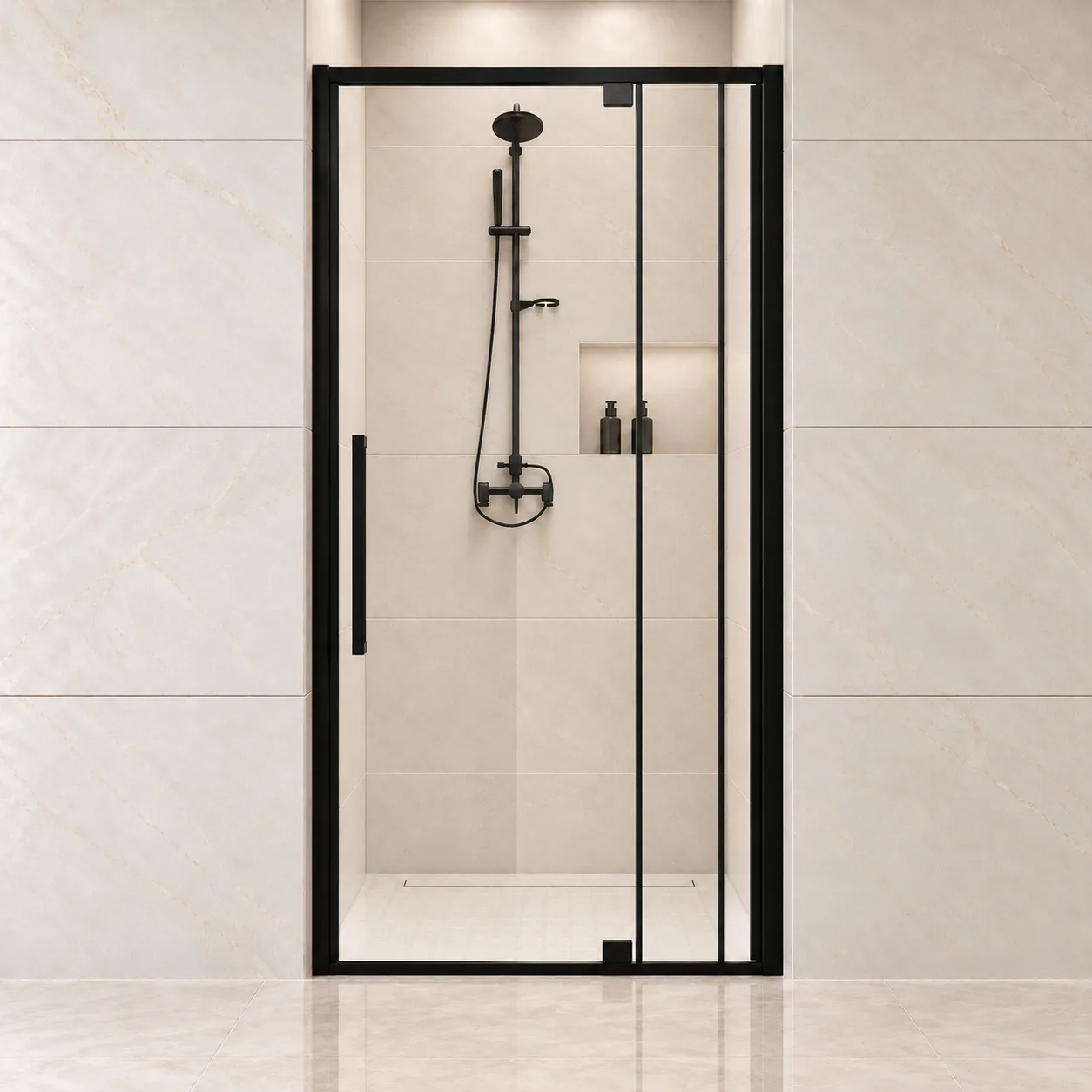
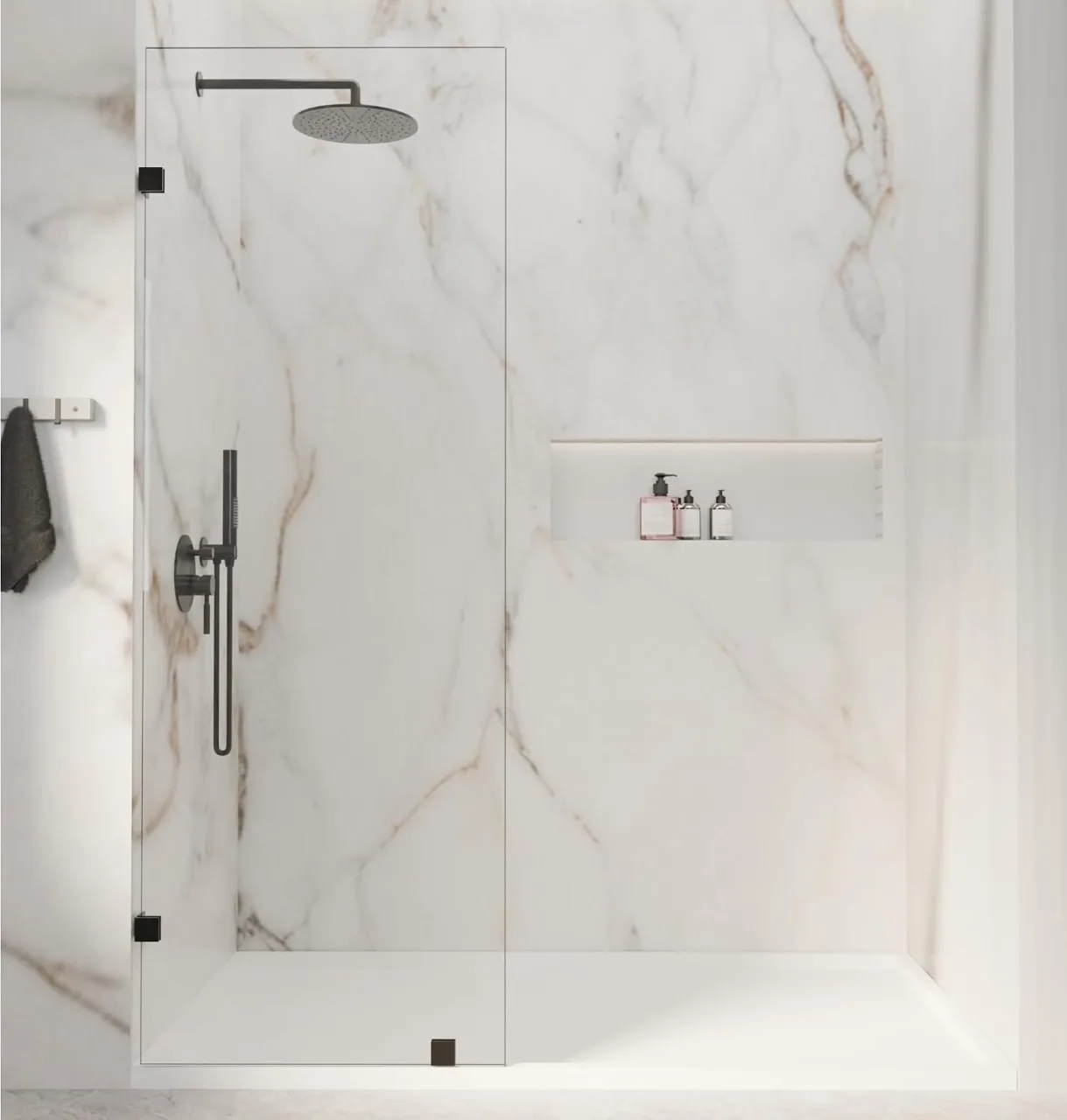
Stand at the bathroom doorway and consider the view toward the shower. A clear panel is not a privacy screen. If household members sometimes use the bathroom at the same time, discuss that routine before choosing a transparent enclosure. A photograph taken with an empty bathroom cannot answer this question for your household.
Check other sightlines
Include windows, adjacent spaces and mirrors in your review. Look at the room from the positions where people actually pass or stand. The planning diagram is a prompt for that review, not a privacy rating or a substitute for checking the real room.
Separate visual openness from personal comfort
Clear glass can make the shower area visually connected with the rest of the bathroom. That may be exactly the look you want, but visual connection also means less separation. Decide whether the household routine suits that choice instead of assuming everyone values the same level of openness.
Do not assume an aftermarket treatment is compatible
If you are considering a film, coating or added screen, ask the product supplier about compatibility before applying anything to the door. Do not treat a generic film listing as approval for your glass or finish. If your project requires obscured glass, confirm whether an appropriate product is actually offered rather than planning around an unavailable option.
Keep the decision separate from fit
Once privacy is settled, continue with finished-opening measurements, panel movement and installation requirements. The glass appearance does not establish that the door fits the site. Review the actual AROJAY product configuration and the materials guide before deciding.